How Traverse City Became Northern Michigan's Great Draw
5 Reasons to Visit® · United States
How Traverse City Became Northern Michigan's Great Draw
A cherry-farming town on a turquoise bay reinvented itself into a food-and-wine capital of the Great Lakes — and became one of the places Americans are quietly choosing to move.
Advertisement
For generations, Traverse City was where Michigan went on vacation. Perched at the base of Grand Traverse Bay, where the deep blue of Lake Michigan reaches an improbably turquoise arm inland, it was a summer town — cherry orchards, lakefront cottages, and a July festival that drew families up north and then let the place go quiet again come autumn. That seasonal rhythm has broken. Over the past decade, this small city on the bay has become one of the most sought-after year-round destinations in the Midwest, and the surrounding region one of the country's quiet migration magnets, drawing people who came to visit and decided to stay.
Advertisement
The old identity was agricultural. Traverse City still calls itself the "Cherry Capital of the World," and the orchards that blanket the surrounding peninsulas remain central to its character. But that farmland has become the foundation of something larger: a nationally noticed food-and-wine scene. The Old Mission and Leelanau peninsulas, reaching out into the bay, turned out to be excellent wine country, and today their vineyards, tasting rooms, farm stands, and distilleries anchor a culinary culture that pulls in visitors and chefs alike. A working farm town quietly became a place people travel to eat and drink well.
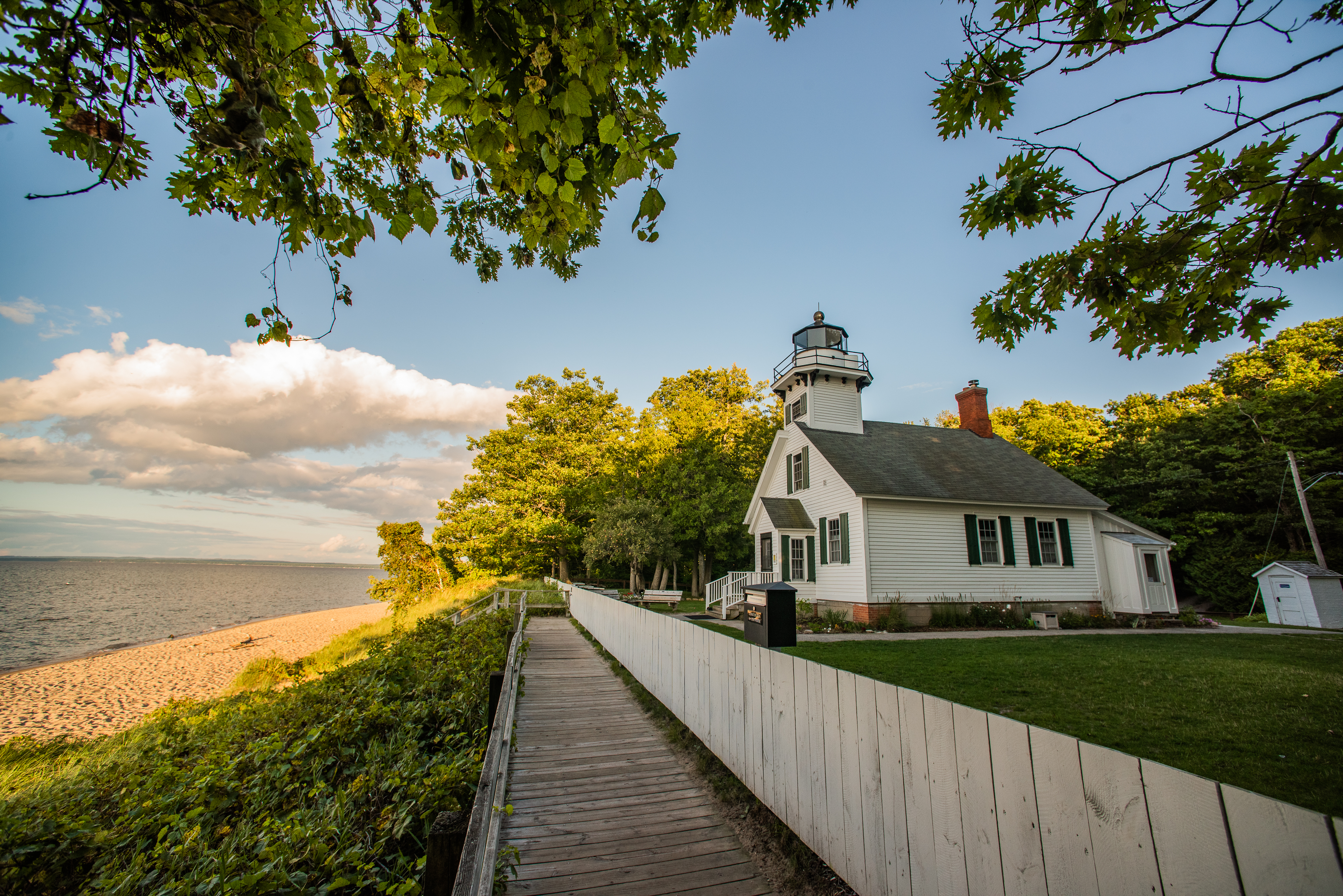
Downtown kept pace. Front Street and the surrounding blocks form a compact, walkable core of independent restaurants, bookshops, boutiques, and a beautifully restored historic movie palace — the kind of lively, human-scaled downtown that far larger cities struggle to sustain. A former state hospital on the edge of town, once slated for demolition, was reborn as the Village at Grand Traverse Commons, a celebrated adaptive-reuse district of shops, eateries, and residences that has become a model for creative preservation. The result is a city that feels cultured and alive well beyond the summer months.
Turquoise freshwater bay on one side, rolling vineyards and cherry orchards on the other.
Advertisement
Still, the water and the land are the heart of it. Grand Traverse Bay puts sailing, paddleboarding, swimming, and fishing at the doorstep, with genuinely stunning freshwater beaches minutes from downtown; nearby, the Sleeping Bear Dunes National Lakeshore — regularly called one of the most beautiful places in America — offers towering dunes and Lake Michigan overlooks. And unlike a pure summer resort, Traverse City leans into all four seasons: the surrounding hills hold ski areas and cross-country trails, the region's rivers and forests draw hikers and cyclists, and winter becomes another reason to be outside rather than a retreat indoors.
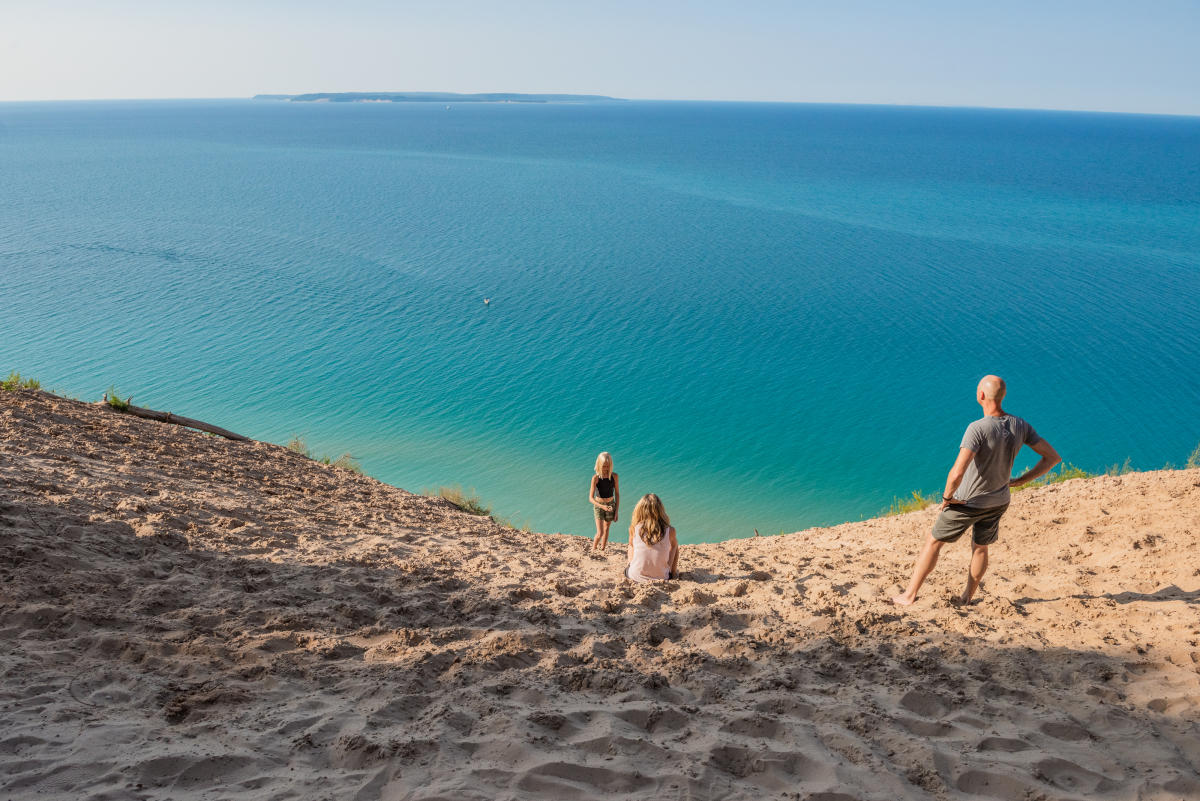
That full-calendar, lifestyle-first appeal is exactly what has driven the shift from vacation spot to home. In the remote-work era, the Traverse City area has become what regional leaders describe as a place that punches above its weight on quality of life, and the migration data backs it up — the wider region has posted net in-migration as people from bigger and pricier places choose scenery, outdoor access, and a slower pace — the same calculus lifting Madison, Wisconsin — over the commute-and-crowd trade-offs of major metros. A growing base of small businesses, healthcare, tourism, and remote employers gives newcomers something to build a livelihood around.
The success brings real strain, and locals name it plainly: a resort economy and a wave of new arrivals have pushed housing costs up and made year-round affordability a genuine challenge in a place that must also house the workers who keep it running. But the underlying draw is not in question. A turquoise bay and world-class dunes, a food-and-wine culture grown from its own orchards, a walkable and creatively reinvented downtown, and four full seasons of the outdoors make Traverse City one of the most appealing small cities in America. For the visitor it makes a luminous long weekend in any season. For the growing number who trade a vacation into an address, it makes the case for a life lived up north — which is exactly why so many now do.
Traverse City, Michigan: FAQ
Is Traverse City, Michigan worth visiting?
Yes. Traverse City offers turquoise freshwater beaches on Grand Traverse Bay, a nationally recognized food-and-wine scene across the Old Mission and Leelanau peninsulas, a walkable downtown, the celebrated Village at Grand Traverse Commons, and the nearby Sleeping Bear Dunes National Lakeshore. It makes a beautiful long weekend in any season.
Why are people moving to the Traverse City area?
The Traverse City region has become a quiet migration magnet as remote workers and others from larger, pricier places choose it for its quality of life, freshwater-lake setting, food-and-wine culture, walkable downtown, and four-season outdoor recreation. Regional leaders note the area 'punches above its weight' on lifestyle, and the wider region has seen net in-migration.
Is Traverse City a good place to live?
Traverse City is frequently ranked among the best small cities and lake towns to live in the U.S. for its scenery, outdoor access, downtown, and food-and-wine culture. The main trade-off is affordability: a strong resort economy and steady in-migration have pushed housing costs up, making year-round affordability a real challenge.
What is Traverse City known for?
Traverse City is known as the 'Cherry Capital of the World,' for its wineries on the Old Mission and Leelanau peninsulas, Grand Traverse Bay's freshwater beaches, the nearby Sleeping Bear Dunes National Lakeshore, a walkable downtown on Front Street, and the National Cherry Festival.
Advertisement