The Small Arkansas Town That Turned into an Art-and-Adventure Capital
5 Reasons to Visit® · United States
The Small Arkansas Town That Turned Into an Art-and-Adventure Capital
Free world-class art, some of the best singletrack on the planet, and a food scene punching absurdly above its weight have made Bentonville the unlikeliest boomtown in America.
Advertisement
Tell someone you're spending a long weekend in Bentonville, Arkansas, and you'll usually get a raised eyebrow. For most of its history this was a quiet county seat in the Ozark foothills, best known — if at all — as the dusty town where a man named Sam Walton opened a five-and-dime on the courthouse square in 1950. That store grew into Walmart, the largest company in the world by revenue, and the wealth and ambition it generated have, over the past two decades, transformed a sleepy Southern town into one of the most talked-about destinations in the country. The raised eyebrows don't last long once people actually visit.
Advertisement
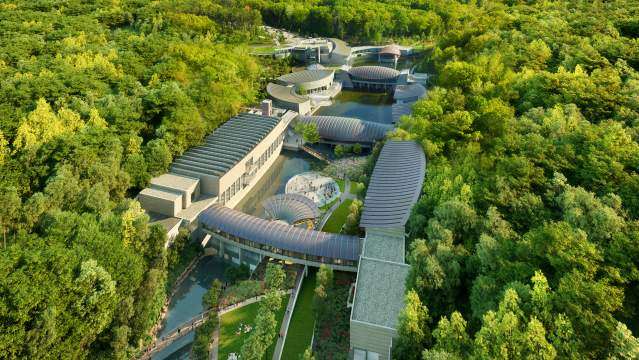
The catalyst was art. In 2011, Walton's daughter, Alice Walton, opened the Crystal Bridges Museum of American Art on a wooded ravine at the edge of downtown — a Moshe Safdie-designed complex threaded with glass-and-timber pavilions over spring-fed pools, holding a collection that spans five centuries of American work. Admission to the permanent collection is free. Almost overnight, a town of a few tens of thousands had a museum of genuine international standing, and the cultural gravity kept building: a contemporary satellite space in a converted cheese factory, a growing calendar of exhibitions, and a design sensibility that began to spread across the whole city.
Then came the bikes. Fueled by the same family philanthropy and a region-wide push, Northwest Arkansas set out to become a mountain-biking capital — and succeeded to a degree that startled the sport. Hundreds of miles of purpose-built trail now lace the hills around Bentonville, ranging from gentle greenways to expert-level flow trails and jump lines, much of it accessible directly from downtown. The town has earned a coveted gold-level ride-center designation, and on any given weekend the square fills with riders fresh off the dirt. What was once a novelty is now central to Bentonville's identity: a place where you can see a Rothko in the morning and ride world-class singletrack in the afternoon.
See a Rothko in the morning, ride world-class singletrack by afternoon.
Advertisement
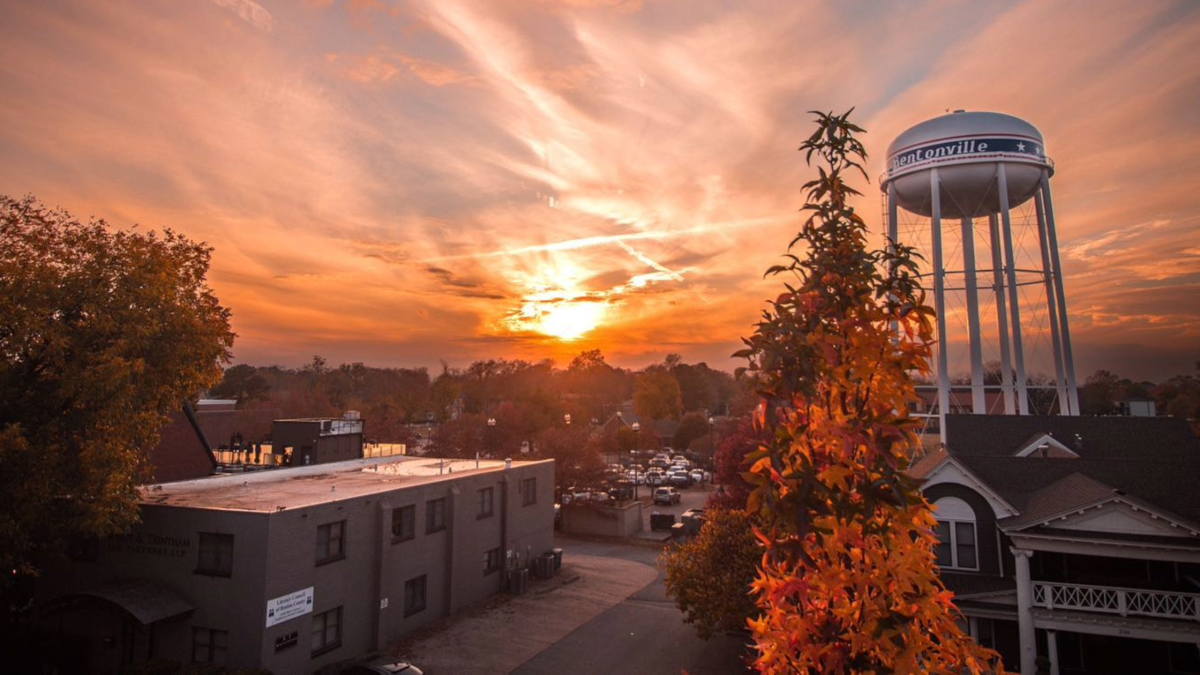
The downtown square has kept pace. The old brick storefronts that once surrounded Walton's original dime store now hold chef-driven restaurants, specialty coffee roasters, cocktail bars, and boutiques, and the food scene in particular has drawn national notice — an unexpected concentration of ambitious kitchens for a town this size, powered by a diverse, well-traveled workforce that expects to eat well. Walkable, green, and anchored by a genuine town square rather than a mall, downtown Bentonville offers the kind of compact, sociable core that so many larger American cities have spent decades trying to recreate.
All of which explains the migration. Bentonville and the surrounding Northwest Arkansas metro have become one of the fastest-growing regions in the country, and the reasons echo the amenities that draw weekend visitors. The job market is anchored not just by Walmart but by nearby Tyson Foods and J.B. Hunt, plus the enormous ecosystem of supplier and vendor offices that cluster near the retailer's headquarters — a deep bench of corporate employment rare for a place this size. Housing, while rising, remains far more affordable than in comparable booming metros; the schools are strong; and the trails, parks, and free art that pull tourists in are simply daily life for residents.
Bentonville is candid that rapid growth brings friction — traffic, housing pressure, and the perennial question of how a small town keeps its character while it swells. But the essential proposition has proven durable. This is a place where serious money was pointed, unusually, at the things that make a community worth living in: art, trails, public space, and a downtown built for people. For the visitor it makes one of the most genuinely surprising long weekends in America. For the growing number of people trading a coastal ZIP code for the Ozarks — a Southern migration it shares with fast-rising Greenville, South Carolina —, it makes the case for a life with more room, more trail, and more culture per dollar than almost anywhere else — which is exactly why they keep coming.
Bentonville, Arkansas: FAQ
Is Bentonville, Arkansas worth visiting?
Yes. Bentonville is home to Crystal Bridges Museum of American Art — a free, world-class museum — plus one of the most extensive mountain-bike trail networks in the country, a fast-growing food and coffee scene, and a charming, walkable downtown square. It has become one of the most surprising long-weekend destinations in the American Heartland.
Why are people moving to Bentonville, Arkansas?
Bentonville is the headquarters of Walmart, the world's largest company by revenue, which along with nearby Tyson Foods and J.B. Hunt anchors a strong regional job market in Northwest Arkansas. Combined with a low cost of living, excellent schools, and an outdoor and arts scene that rivals far larger cities, it has become a magnet for relocating professionals and families.
What is Bentonville known for?
Bentonville is known as the birthplace and headquarters of Walmart, as the home of the Crystal Bridges Museum of American Art, and as one of the top mountain-biking destinations in the world, having been designated a gold-level ride center. Its historic downtown square and rapidly growing culinary scene round out the appeal.
Is Bentonville a good place to live?
Bentonville and the wider Northwest Arkansas region consistently rank among the best places to live in the U.S. for their strong job market, affordability, quality schools, and exceptional access to outdoor recreation and free world-class art. Housing remains more affordable than in comparable growing metros, and the area continues to invest heavily in trails, parks, and cultural amenities.
Advertisement