The Small Indiana Town That Is a World Capital of Modern Architecture
5 Reasons to Visit® · United States
The Small Indiana Town That Is a World Capital of Modern Architecture
An engine company's CEO made a deal with his town: pick a great architect, and the foundation pays the fee. The result is one of the most architecturally important small cities on earth.
Advertisement
Columbus, Indiana, is a small city of around fifty thousand people set amid the farmland of south-central Indiana, and it holds one of the most improbable distinctions in America: it is a world capital of modern architecture. Ranked among the most architecturally important cities in the United States — in the company of Chicago, New York, and San Francisco — this modest Midwestern town draws tens of thousands of design pilgrims a year to see a concentration of masterworks that would be extraordinary in a metropolis and is simply astonishing in a place this size.
Advertisement
The story behind it is unique in American life. In the 1950s, the town's largest employer — the engine manufacturer Cummins — and its visionary chairman, J. Irwin Miller, made the community an extraordinary offer: through the Cummins Foundation, the company would pay the architectural fees for new public buildings, so long as the town chose from a list of the world's finest modern architects. The school board said yes, and over the following decades that program produced dozens of buildings — schools, churches, libraries, banks, fire stations — designed by giants like Eero and Eliel Saarinen, I.M. Pei, Richard Meier, Robert Venturi, Kevin Roche, and César Pelli.
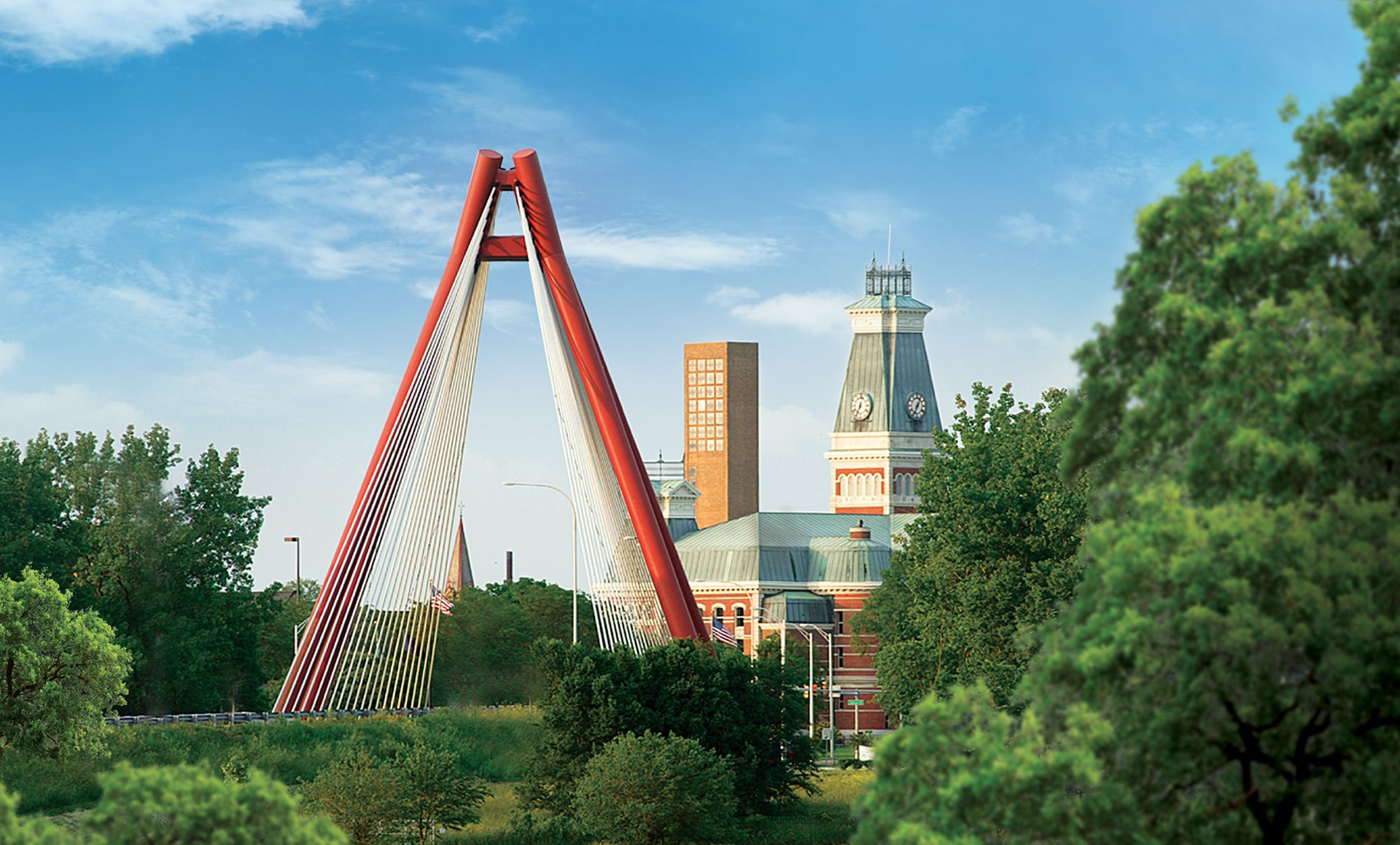
The result is a town that treats world-class design as a civic birthright. Visitors can tour the Miller House and Garden, a modernist icon, see Eero Saarinen's soaring North Christian Church with its single dramatic spire, and wander a downtown dotted with landmark buildings and public art, including a kinetic sculpture by Jean Tinguely. The Cummins Foundation program continues to this day, and the Exhibit Columbus biennial keeps the city's design conversation vibrantly alive, drawing architects and enthusiasts from around the world.
Buildings by Saarinen, Pei, Meier, and Venturi — dozens of them — in an Indiana town of 50,000.
Advertisement
Underneath the architecture sits a genuinely strong economy. Cummins, a Fortune 500 company, remains headquartered in Columbus, anchoring the city with high-skill engineering and manufacturing jobs and a global corporate presence rare for a town this size. That deep, stable employment base is the foundation that made — and continues to make — the city's cultural ambitions possible, and it gives newcomers real career opportunity.

For all its design fame, Columbus offers classic Midwestern livability. It has a walkable, art-filled downtown, strong schools, extensive parks and trails, and a cost of living far below the coasts, within easy reach of Indianapolis to the north. That combination — a Fortune 500 job base, world-class design and culture, and genuine affordability — is a rare and compelling package, drawing engineers, families, and design-minded people who want substance without a big-city price tag — the same value pull felt in Michigan comeback cities like Grand Rapids —.
Columbus is a small city, honest about the quiet that comes with its scale. But its distinction is genuinely one of a kind. A world-class collection of modern architecture, a Fortune 500 anchor, a walkable and cultured downtown, and Midwestern affordability have made Columbus, Indiana, unlike anywhere else in America. For the visitor it makes an unforgettable architectural pilgrimage. For the growing number who settle in, it makes the case for a life where great design is simply part of everyday civic life — which is exactly why they keep discovering it.
Columbus, Indiana: FAQ
Is Columbus, Indiana worth visiting?
Yes. Columbus is one of the most architecturally important cities in America, with dozens of modernist masterworks by Eero Saarinen, I.M. Pei, Richard Meier, Robert Venturi, and others — including the Miller House, North Christian Church, and landmark public buildings. It draws tens of thousands of architecture pilgrims a year and makes an unforgettable design-focused visit.
Why is Columbus, Indiana famous for architecture?
Beginning in the 1950s, the Cummins Foundation — established by the engine company's chairman J. Irwin Miller — offered to pay the architectural fees for new public buildings if the town chose from a curated list of the world's best modern architects. The program produced dozens of acclaimed buildings and made Columbus a world capital of modern architecture.
Why are people moving to Columbus, Indiana?
Columbus offers a rare combination of a Fortune 500 employer (Cummins) providing high-skill jobs, world-class architecture and culture, a walkable downtown, strong schools, and a low cost of living, within easy reach of Indianapolis. It draws engineers, families, and design-minded people seeking substance and value.
What is Columbus, Indiana known for?
Columbus is known as a world capital of modern architecture, with dozens of buildings by renowned architects funded through the Cummins Foundation program, and as the headquarters of the Fortune 500 engine manufacturer Cummins. It's a major architectural pilgrimage destination and home to the Exhibit Columbus biennial.
Advertisement