How Greenville Built One of America's Best Main Streets
5 Reasons to Visit® · United States
How Greenville Built One of America's Best Main Streets
A faded mill town on the edge of the Blue Ridge tore up its main road, uncovered a waterfall, and reinvented itself into one of the South's most livable cities.
Advertisement
Greenville, South Carolina, spent most of the twentieth century as a textile town — the self-proclaimed "Textile Center of the World," a place of mills and mill villages strung along the Reedy River in the foothills of the Blue Ridge. When the textile industry collapsed and moved overseas, Greenville faced the fate of so many Southern mill towns: a hollowed-out downtown and an uncertain future. Instead, over the following decades, it engineered one of the most admired downtown revivals in the country, and today it turns up on nearly every list of the best places to live and visit in the South.
Advertisement
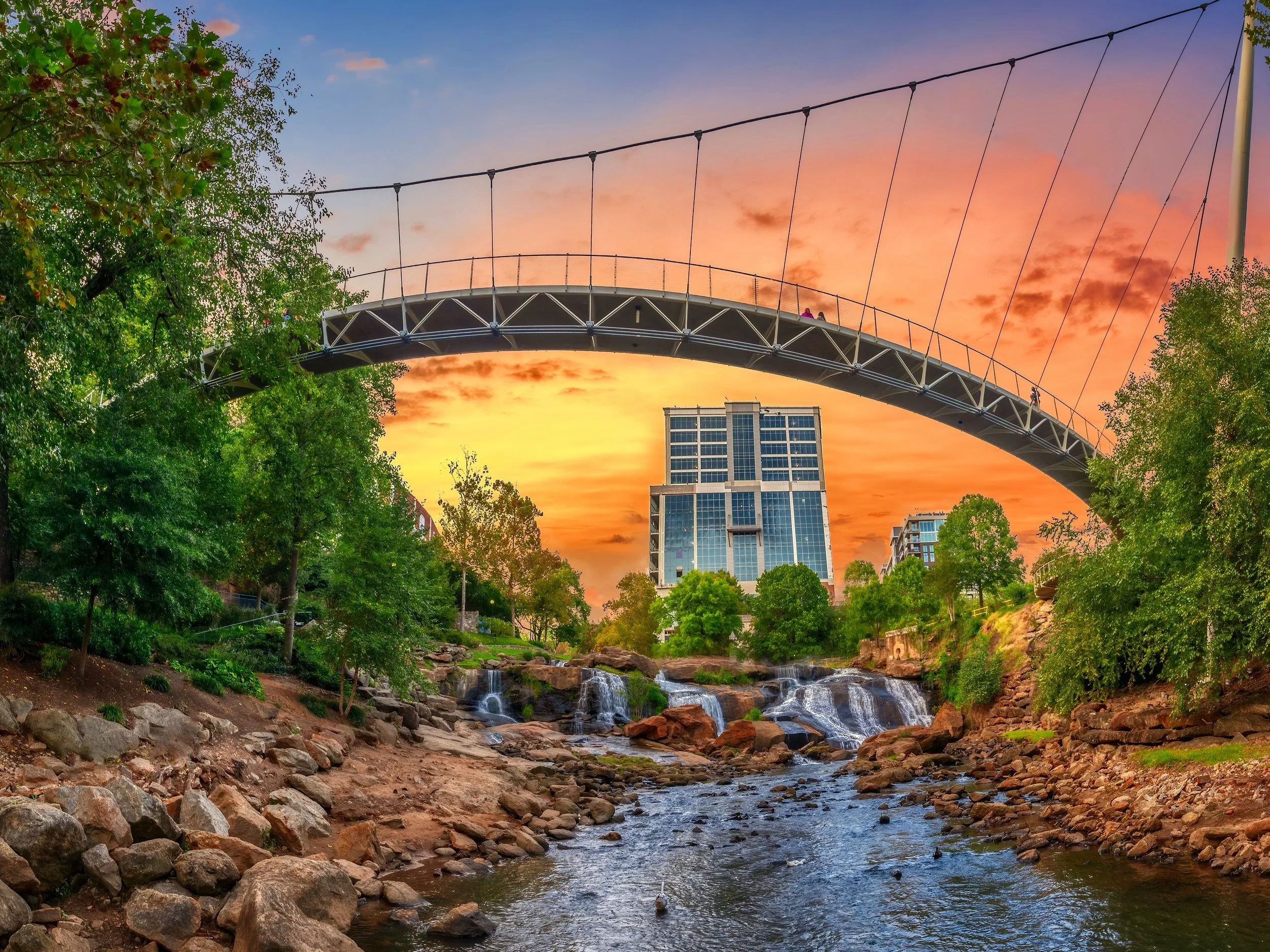
The centerpiece of that revival is almost absurdly picturesque. For years, a utilitarian four-lane highway bridge crossed — and hid — a genuine waterfall in the heart of downtown. In one of the boldest civic bets in recent memory, the city tore the bridge down, restored the river gorge as Falls Park on the Reedy, and spanned it with the graceful, curving Liberty Bridge, a suspended pedestrian walkway that now serves as Greenville's signature image. A working textile town revealed, quite literally, the natural beauty it had paved over.
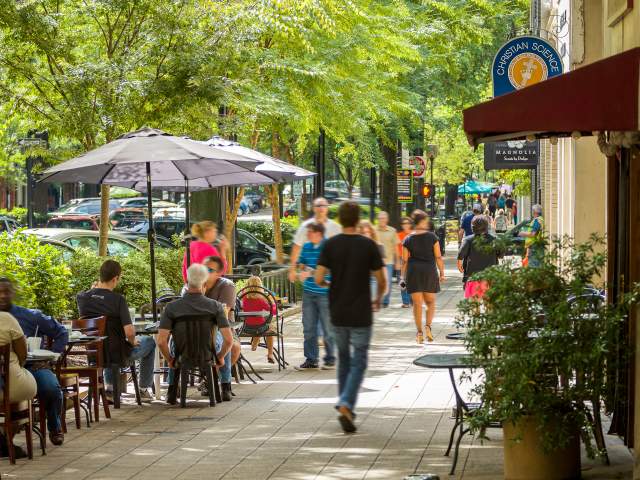
Around that centerpiece, Main Street became the model. Rather than the wide, car-choked artery of most American downtowns, Greenville narrowed its main road, widened the sidewalks, planted rows of oak trees, and filled the storefronts with independent restaurants, galleries, and shops. The result is one of the most consistently praised downtowns in the United States — walkable, shaded, and alive from morning coffee through late dinner, dotted with public art and gathering spaces. It is the kind of core that planners from other cities come to study.
They demolished a four-lane bridge to reveal the waterfall it had been hiding for decades.
Advertisement
The economy underneath it is what makes the lifestyle sustainable. Greenville sits at the heart of a manufacturing corridor that reinvented itself around advanced industry: BMW's largest plant in the world operates just down the interstate near Spartanburg, Michelin's North American headquarters is in the region, and a dense network of automotive, aerospace, and engineering employers has drawn a diverse, international workforce. Where the old economy exported textiles, the new one builds cars and machinery — and pays well enough to fuel the restaurants and rooftops downtown.
The setting seals it. Greenville sits right at the foot of the Blue Ridge Escarpment, so the mountains, state parks, and waterfalls of the Carolinas are a short drive away, and the Prisma Health Swamp Rabbit Trail — a rail-to-trail greenway — runs from downtown out through the surrounding towns and countryside, a favorite of cyclists and runners. Add a mild climate, a lower cost of living than the big coastal metros, and a location roughly halfway between Atlanta and Charlotte, and the appeal to relocating families and professionals — the same draw fueling Chattanooga, Tennessee, a short drive north — becomes obvious.
Greenville still carries the honest complexities of a fast-growing Southern city, from affordability pressures to the work of ensuring the boom reaches all its neighborhoods. But the transformation is genuine and widely studied for good reason. A town that lost its founding industry answered by investing in the things that make a place worth being: a restored river, a beautiful and walkable Main Street, a reinvented economy, and easy access to the mountains. For the visitor it makes one of the most charming long weekends in the South. For the growing number who decide to stay, it makes the case for a life with real character at a livable price — which is exactly why they keep choosing it.
Greenville, South Carolina: FAQ
Is Greenville, South Carolina worth visiting?
Yes. Greenville is celebrated for one of the best downtowns in America — a walkable, tree-lined Main Street centered on Falls Park on the Reedy and its iconic Liberty Bridge over a waterfall. With a strong food scene, public art, the Swamp Rabbit Trail, and the Blue Ridge Mountains nearby, it makes a charming and easy long weekend.
Why are people moving to Greenville, SC?
Greenville has become a Southern boomtown thanks to a reinvented advanced-manufacturing economy anchored by employers like BMW and Michelin, a nationally admired walkable downtown, a low cost of living, a mild climate, and easy access to the Blue Ridge Mountains. It draws relocating professionals and families from across the country.
What is Greenville known for?
Greenville is known for its award-winning downtown and Main Street, Falls Park on the Reedy River with the Liberty Bridge, its history as a former textile-manufacturing center, the Swamp Rabbit Trail greenway, and its role as a hub of the region's automotive and advanced-manufacturing industry.
Is Greenville a good place to live?
Greenville regularly ranks among the best places to live in the South for its walkable downtown, strong job market, affordability, mild climate, and proximity to the mountains. Housing costs less than in major coastal metros, and the city sits roughly halfway between Atlanta and Charlotte.
Advertisement