How Richmond Reinvented Itself Into the South's Coolest Capital
5 Reasons to Visit® · United States
How Richmond Reinvented Itself Into the South's Coolest Capital
A once-staid Southern capital has reinvented itself into a city of chefs, muralists, and river rapids — and become one of the most exciting places on the East Coast.
Advertisement
Richmond, Virginia, spent a long time weighed down by its history. As the former capital of the Confederacy and a city long defined by that past, Virginia's capital had a reputation as staid, conservative, and a bit sleepy — a place people associated more with monuments than with momentum. Over the past two decades, and especially in recent years, Richmond has undergone a striking reinvention, emerging as one of the most creative and exciting cities on the East Coast, a magnet for chefs, artists, and young professionals drawn by its energy and its value.
Advertisement
The food scene led the way. Richmond has become one of the most celebrated culinary cities in the South, earning national attention for a dense, ambitious, and refreshingly unpretentious restaurant culture that spans everything from acclaimed fine dining to a deep bench of independent kitchens, bakeries, coffee roasters, and one of the strongest craft-beer scenes on the coast. For a mid-sized city, the concentration of serious food and drink is remarkable, and it has become central to Richmond's identity and its draw.
The arts followed, and transformed the city's look. Anchored by Virginia Commonwealth University's top-ranked art school, Richmond has become a canvas — its annual mural festival and thriving street-art scene have covered whole neighborhoods in ambitious public art, while districts like Carytown, Scott's Addition, and the Arts District have filled with galleries, boutiques, breweries, and music venues. A former industrial city has turned its old brick bones into one of the most visually vibrant urban cores in the region.
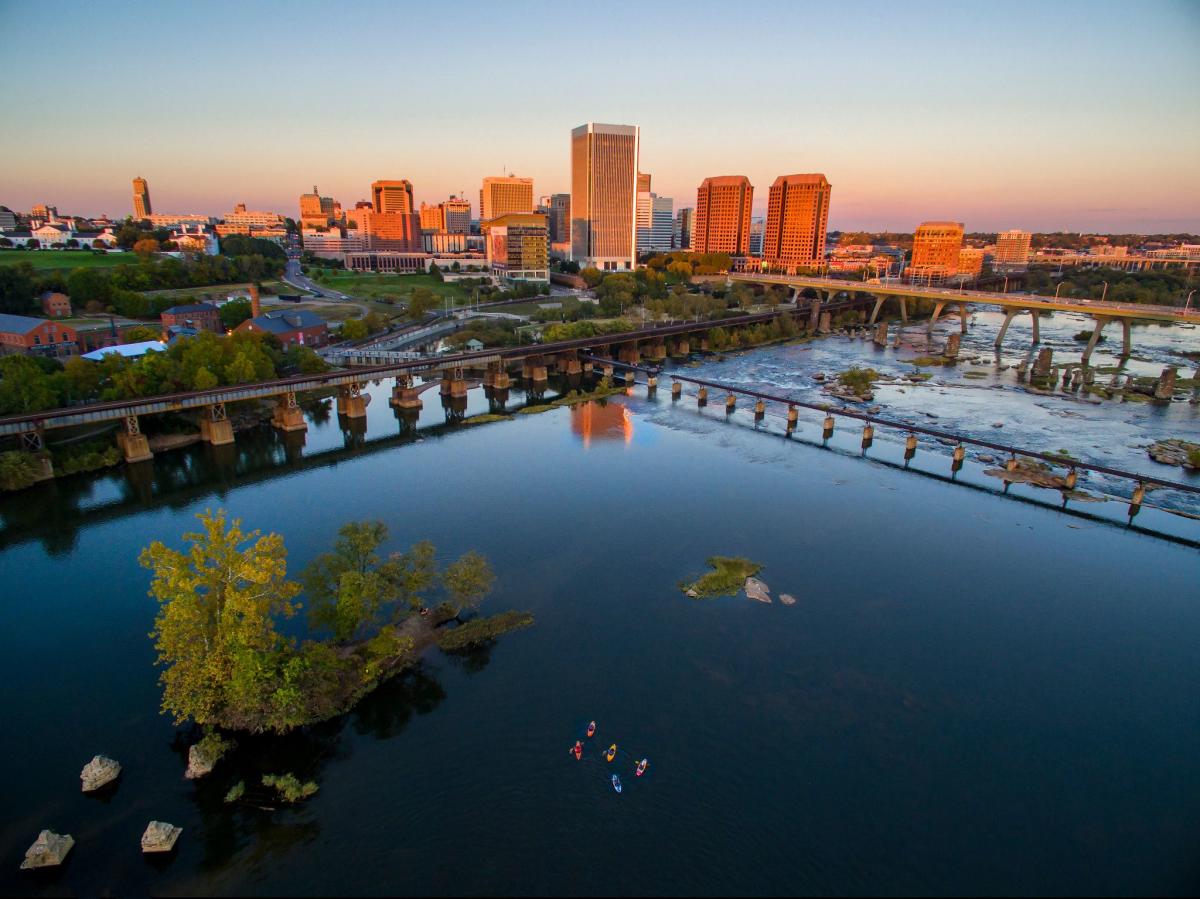
The only major U.S. city with Class IV whitewater rapids running through its downtown.
Advertisement
What genuinely sets Richmond apart, though, runs right through the middle of it. The James River pours through downtown over a series of rapids, making Richmond the only major American city with Class III and IV whitewater within its city limits — you can raft serious rapids with the skyline in view. The James River Park System threads miles of trails, islands, and swimming holes through the heart of the city, giving Richmond an outdoor life most East Coast capitals can only envy.
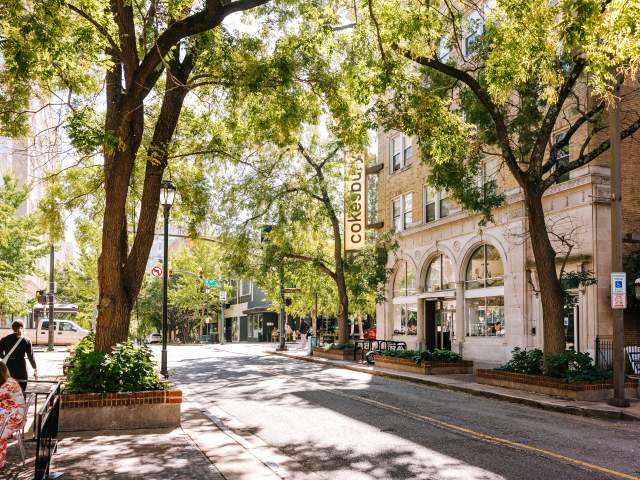
That combination has driven a wave of new residents. Richmond offers big-city culture — food, art, music, river recreation — at a cost of living well below Washington, D.C., just a hundred miles north, and its location on the I-95 corridor keeps it connected to the whole Northeast while remaining far more affordable. Young professionals, remote workers, and families priced out of D.C. and other coastal metros have flowed in — much as they have into fast-rising Greenville, South Carolina —, drawn by the value, the energy, and the quality of life.
Richmond continues to reckon honestly and publicly with its complex history even as it reinvents itself, and growth brings the familiar pressures on housing and equity. But the transformation is real and widely recognized. A nationally celebrated food scene, a vibrant arts and mural culture, whitewater rapids running through downtown, and genuine East Coast value have made Richmond one of the most exciting cities in the South. For the visitor it makes a surprising, delicious, adventurous weekend. For the growing number who settle in, it makes the case for a creative, river-run city that finally stepped out of its own shadow — which is exactly why they keep coming.
Richmond, Virginia: FAQ
Is Richmond, Virginia worth visiting?
Yes. Richmond offers a nationally celebrated food and craft-beer scene, a vibrant arts and mural culture anchored by VCU, historic districts like Carytown and Scott's Addition, and the James River running through downtown with Class III and IV whitewater and miles of park trails. It makes a surprising, delicious, and adventurous weekend.
Why are people moving to Richmond, VA?
Richmond draws young professionals, remote workers, and families with big-city culture — a celebrated food scene, thriving arts, and river recreation — at a cost of living well below Washington, D.C., about 100 miles north. Its location on the I-95 corridor keeps it connected to the Northeast while remaining far more affordable.
What is Richmond known for?
Richmond is known for its acclaimed food and craft-beer scene, its arts and mural culture anchored by Virginia Commonwealth University, historic districts like Carytown and Scott's Addition, and the James River — it's the only major U.S. city with Class III and IV whitewater rapids running through downtown.
Is Richmond a good place to live?
Richmond offers a celebrated food scene, vibrant arts, river recreation, and historic neighborhoods at a cost of living well below Washington, D.C., with easy access to the Northeast via I-95. Like many revitalizing cities, it works to manage growth and address housing and equity as more people arrive.
Advertisement