How Frederick Became the Walkable Escape from the DC Grind
5 Reasons to Visit® · United States
How Frederick Became the Walkable Escape from the DC Grind
An hour from Washington, a canal-threaded historic downtown at the foot of the Catoctins has become the escape valve for everyone worn out by the capital.
Advertisement
Frederick, Maryland, has become the answer to a very common question: where do you go when you love the opportunity of the Washington, D.C., region but can no longer stand its cost and its congestion? About an hour northwest of the capital, at the foot of the Catoctin Mountains, this historic city has emerged as one of the most sought-after places in the mid-Atlantic — a walkable, characterful escape valve for a metro area that has been pushing people outward for years.
Advertisement
Its greatest asset is one of the finest historic downtowns in the region. Frederick's roughly fifty-block historic district is a beautifully preserved collection of eighteenth- and nineteenth-century architecture, church spires, and brick streets, filled today with independent restaurants, galleries, boutiques, and breweries. Running through the heart of it is Carroll Creek Promenade, a landscaped canal-side walkway with footbridges, public art, and waterside dining — a distinctive centerpiece that turns a flood-control project into one of the loveliest urban spaces in Maryland.
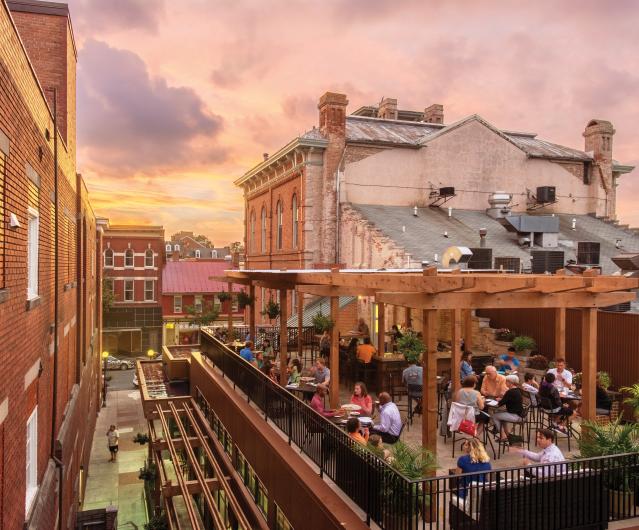
The economy gives the charm staying power. Frederick sits within Maryland's biotech and life-sciences corridor and is anchored by a major federal biomedical research presence at Fort Detrick, along with a growing cluster of biotech firms, healthcare, and technology employers. That base, combined with easy access to the enormous job market of the D.C. metro, gives residents real economic opportunity without requiring a daily slog into the city center.
A creekside canal winds through a 50-block historic district, an hour from the Capitol dome.
Advertisement
The setting adds the outdoors. Frederick sits at the edge of the mountains, with the Catoctin range, Cunningham Falls, and the Appalachian foothills close at hand for hiking, and the Monocacy River and surrounding countryside — wineries, farms, and Civil War history among them — filling out the region. It is a city with genuine access to nature, a short drive from trails and ridgelines, yet firmly connected to the metropolitan economy.
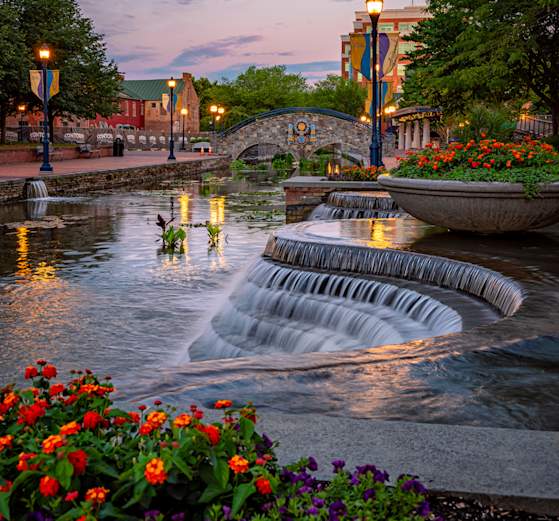
Connectivity and value drive the migration. Frederick offers commuter rail and highway access to Washington and Baltimore, so residents can plug into those job markets while living somewhere far more affordable and human-scaled. Compared with the pricey inner suburbs of D.C., Frederick delivers a real historic downtown, more space, and a lower cost of living, and it has drawn a steady stream of families, professionals, and remote workers seeking exactly that trade — much like Hudson Valley escapes such as Beacon, New York.
Frederick contends with the growth pressures of a popular commuter city — rising home prices and the challenge of scaling without losing its historic character chief among them. But the appeal is clear and durable. A beautifully preserved and walkable historic downtown, a canal-side promenade, a booming biotech economy, mountain access, and value within reach of two major cities have made Frederick one of the most desirable places in the mid-Atlantic. For the visitor it makes a charming, easy escape from the capital. For the growing number who settle in, it makes the case for a life with history and mountains an hour from the Beltway — which is exactly why they keep coming.
Frederick, Maryland: FAQ
Is Frederick, Maryland worth visiting?
Yes. Frederick offers one of the finest historic downtowns in the mid-Atlantic — a roughly 50-block district of preserved architecture, restaurants, galleries, and breweries — centered on the Carroll Creek Promenade, a canal-side walkway with footbridges and waterside dining. With the Catoctin Mountains and Civil War history nearby, it makes a charming escape about an hour from Washington, D.C.
Why are people moving to Frederick, MD?
Frederick draws families, professionals, and remote workers who want access to the Washington, D.C., job market without its cost and congestion. About an hour from the capital with commuter rail and highway access, it offers a walkable historic downtown, a booming biotech economy anchored by Fort Detrick, mountain access, and more affordability and space than D.C.'s inner suburbs.
What is Frederick known for?
Frederick is known for its large, well-preserved historic downtown and the Carroll Creek Promenade, its biotech and life-sciences economy anchored by Fort Detrick, its Civil War history, and its location at the foot of the Catoctin Mountains within reach of both Washington, D.C., and Baltimore.
Is Frederick a good place to live?
Frederick offers a walkable historic downtown, a strong biotech and healthcare economy, mountain and countryside access, and commuter connections to Washington and Baltimore, all at a lower cost than D.C.'s inner suburbs. Home prices have risen with its popularity as a commuter city, but it remains more affordable and human-scaled than the closer-in suburbs.
Advertisement