Madison, Wisconsin Is the Lake City Everyone Keeps Ranking First
5 Reasons to Visit® · United States
Madison, Wisconsin: The Lake City Everyone Keeps Ranking First
A state capital and flagship university squeezed onto a narrow isthmus between two lakes, Madison keeps topping the livability rankings — and residents will happily tell you why.
Advertisement
Madison, Wisconsin, has a geography unlike almost any other American city. Its downtown occupies a narrow isthmus — a slender neck of land, in places barely half a mile wide, pinched between two large glacial lakes, Mendota and Monona. On that improbable ribbon sit both the domed state capitol and, a few blocks away, the flagship campus of the University of Wisconsin. The result is a compact, water-wrapped, endlessly walkable city that consistently lands at or near the top of national rankings for livability, health, and quality of life.
Advertisement
The engine is a rare and durable pairing: government and a major research university, side by side. As the state capital, Madison has a stable base of public employment; as home to one of the country's premier public research universities, it has a constant influx of talent, ideas, and startups. That combination has fueled a booming biotech and health-sciences economy — one of the strongest in the Midwest — along with a growing technology sector, giving the city an educated, entrepreneurial workforce that belies its mid-sized footprint.
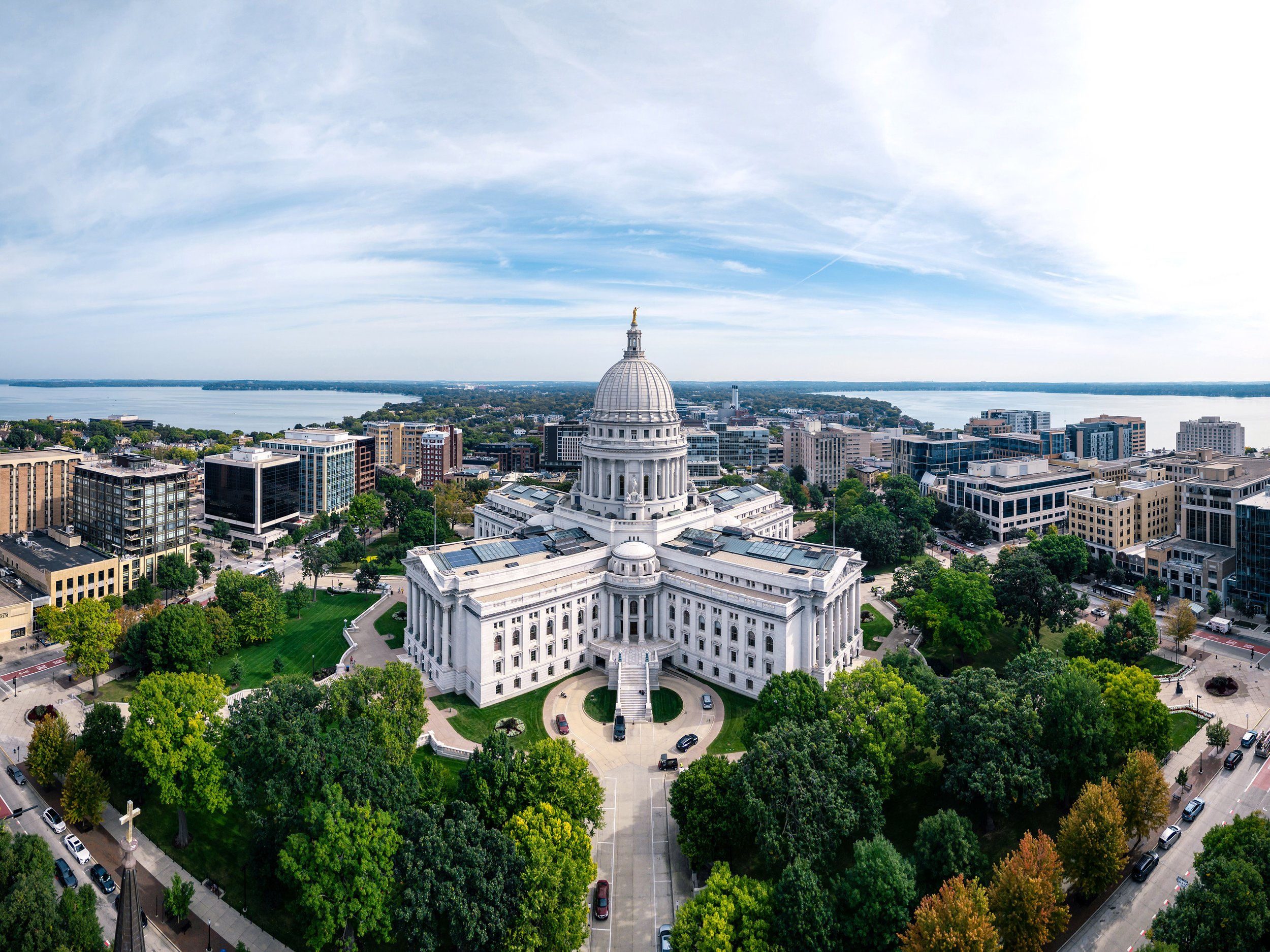
Downtown life is organized around that energy. State Street, a pedestrian-and-transit corridor, connects the capitol to the university and is lined with restaurants, bookshops, music venues, and museums. On Saturdays, the Dane County Farmers' Market — one of the largest producer-only markets in the nation — wraps the entire capitol square, a ritual that captures Madison's civic, food-loving, community-minded character in a single morning. The food scene leans heavily on Wisconsin's agricultural bounty, and the city's progressive, university-town culture keeps the calendar full of festivals and ideas.
A farmers market that rings the state capitol, on an isthmus barely half a mile wide.
Advertisement
Then there are the lakes, which are less a backdrop than a way of life. In the warm months, Madisonians sail, paddle, and swim; the university's lakeside terrace is one of the great public gathering spaces in the country. When the water freezes, the city simply keeps going out on it — ice skating, ice fishing, and cross-country skiing turn winter into another season of activity rather than a retreat indoors. A network of bike paths and greenways, among the best in the nation, threads the whole city together and makes car-free living genuinely realistic.
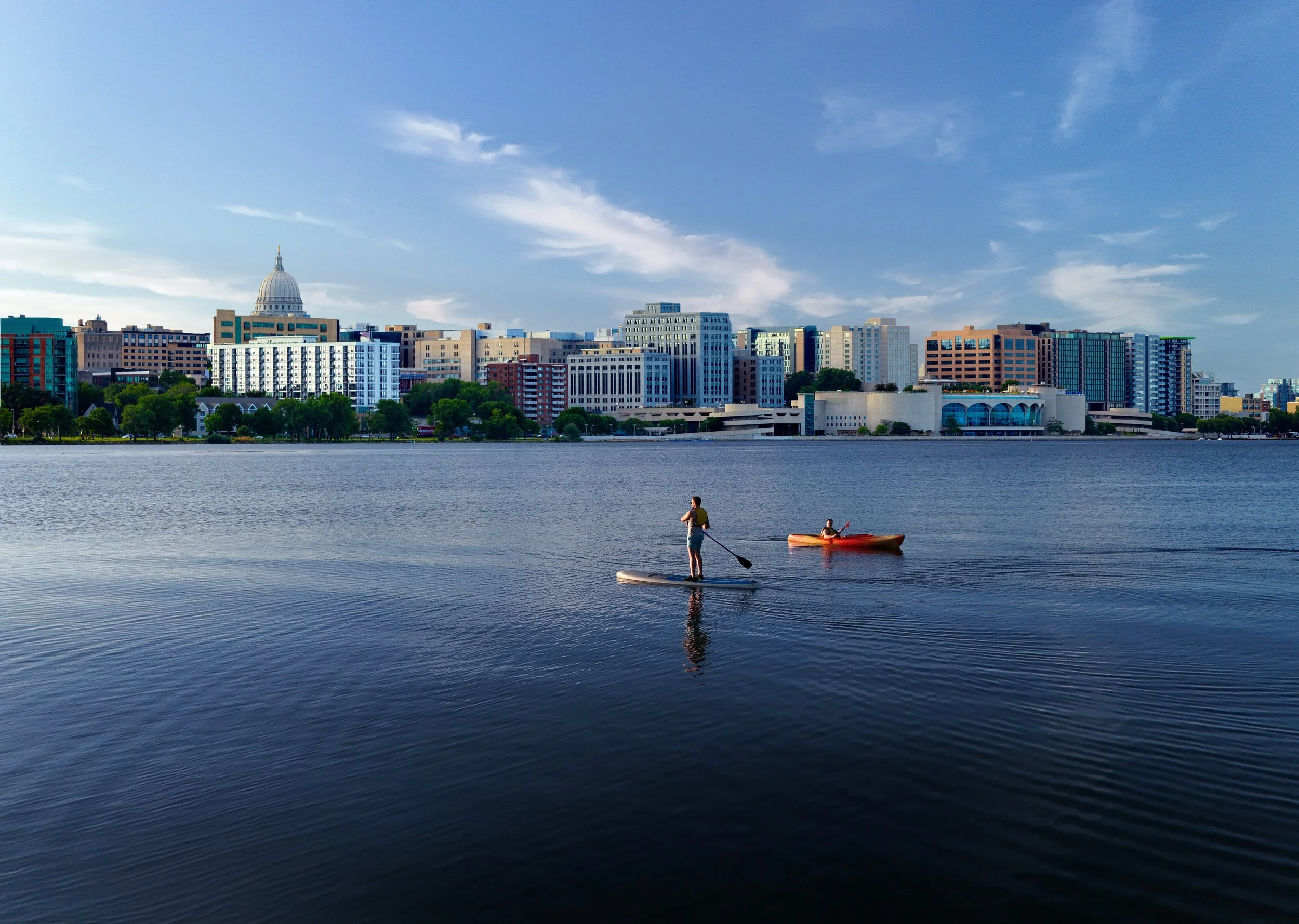
All of it adds up to a place people increasingly want to move to. Madison offers big-city amenities — culture, cuisine, a serious job market — at a Midwestern cost of living and human scale, without the sprawl or gridlock of larger metros. The schools are strong, the airport connects to major hubs, and the sense of civic investment is palpable. For families, professionals, and university talent choosing to stay — much as they do in lake-loving Traverse City, Michigan — after graduation, the value proposition is compelling.
Madison contends with the same growth and affordability pressures found in every desirable city, and its famous winters are not for everyone. But the fundamentals are exceptional and widely recognized. A walkable downtown wedged between two lakes, a recession-resistant economy built on government and a world-class university, a legendary farmers market, and four full seasons of lake life make Madison one of the most livable cities in America. For the visitor it makes a lively, surprising long weekend. For the growing number who put down roots, it makes the case for a balanced Midwestern life that keeps earning its top rankings — which is exactly why the accolades keep coming.
Madison, Wisconsin: FAQ
Is Madison, Wisconsin worth visiting?
Yes. Madison offers a walkable downtown on an isthmus between two lakes, the pedestrian State Street connecting the capitol to the University of Wisconsin, one of the nation's largest farmers markets around the capitol square, a strong food scene, and year-round lake recreation. It makes a lively and surprising long weekend.
Why do people move to Madison, Wisconsin?
People move to Madison for its high quality of life, walkable lakeside downtown, and a stable, recession-resistant economy anchored by state government and the University of Wisconsin, along with a booming biotech and health-sciences sector. A Midwestern cost of living, strong schools, and excellent bike infrastructure add to the appeal.
Is Madison a good place to live?
Madison consistently ranks among the best places to live in the U.S. for its quality of life, health, education, and economy. It offers big-city amenities at a Midwestern cost of living, a walkable downtown between two lakes, top-tier bike infrastructure, and a strong job market, though winters are cold and housing demand is rising.
What is Madison known for?
Madison is known for its isthmus setting between Lake Mendota and Lake Monona, the Wisconsin State Capitol, the University of Wisconsin, State Street, the Dane County Farmers' Market, a strong biotech economy, and abundant lake and outdoor recreation year-round.
Advertisement