The New Mexico Ghost Town That Came Back to Life as an Artist Colony
5 Reasons to Visit® · United States
The New Mexico Ghost Town That Came Back to Life as an Artist Colony
Once a booming coal town, then an abandoned ghost town, Madrid was revived by artists who bought its old company houses for a song. Today the funky high-desert village on the Turquoise Trail may have more artists per capita than any town in America.
Advertisement
Madrid, New Mexico — pronounced "MAD-rid," not like the Spanish capital — is one of the great comeback stories of the American West, packed into a single funky high-desert village. Strung along the Turquoise Trail scenic byway roughly midway between Santa Fe and Albuquerque, this town of around 250 people has lived three distinct lives: a booming coal-mining company town, an abandoned ghost town, and now a thriving artist colony of galleries tucked into century-old miners' houses. It's quirky, scenic, and utterly one of a kind — the rare place where you can feel all three of its lives at once.
Advertisement
Its heyday was genuinely remarkable. In the early 20th century, some four thousand people lived here, mining coal — both hard and soft, thanks to an unusual geology found in only a couple of places on earth — for the Santa Fe Railroad and beyond. The prosperous company town became famous for outsized spectacles: the first lighted baseball stadium in the West, a Fourth of July parade, and a legendary lighted Christmas display so dazzling that TWA passenger planes would reportedly divert their routes to swoop over it on the way to Albuquerque.
Then it all went dark. When demand for coal collapsed after World War II, Madrid emptied out practically overnight — the mines closed, the company houses stood forlorn and abandoned, and the once-bustling town became a genuine ghost town, silent for decades. For a while it was a place people drove past, a row of empty buildings baking in the high-desert sun, its glory days a memory.
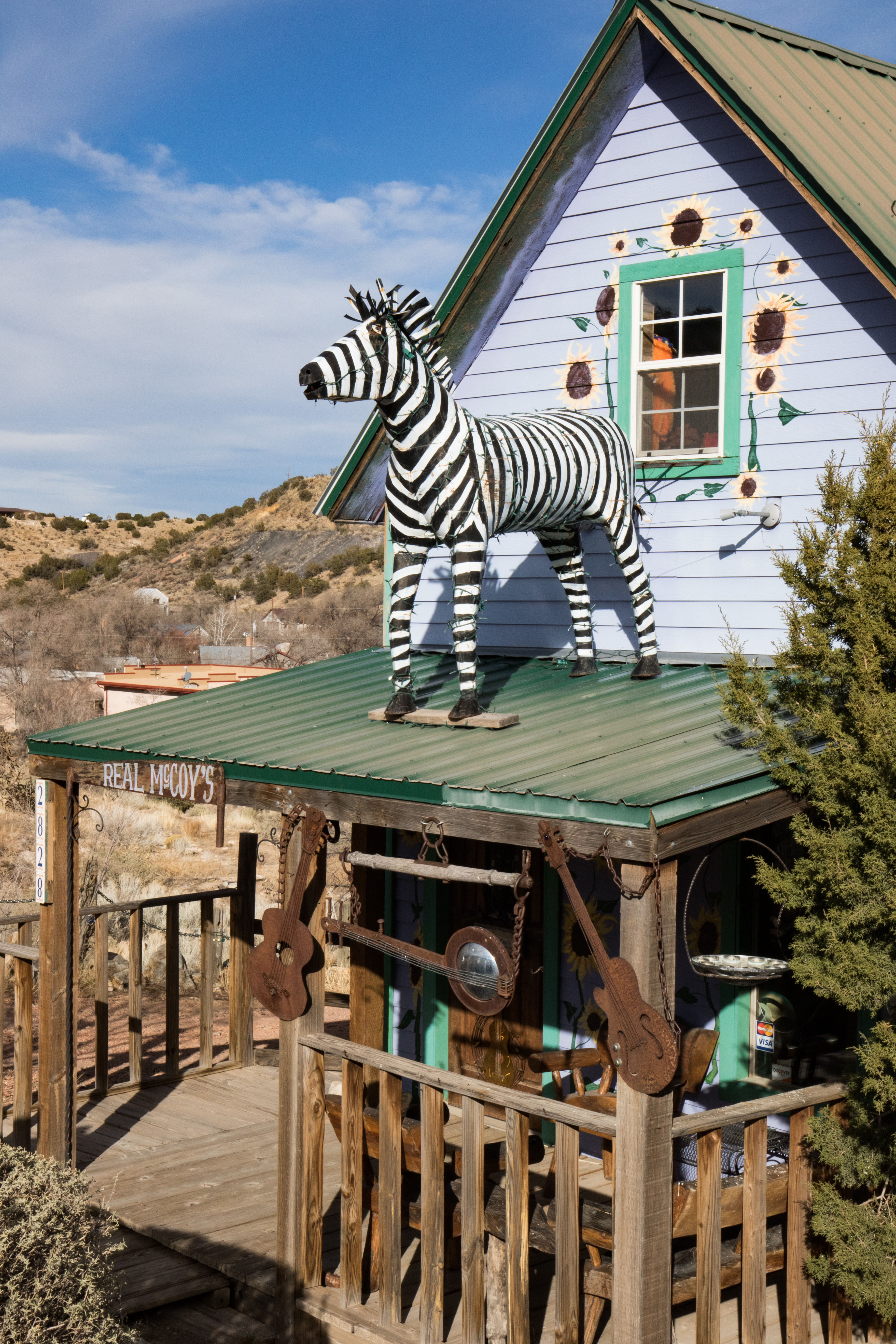
A coal town, then a ghost town, now an artist colony on the high-desert Turquoise Trail.
Advertisement
Its third life began in the 1970s, and it stuck. Artists and free spirits, drawn by the scenery and by ramshackle houses selling for five or ten thousand dollars, began moving in and converting the old company stores and cabins into homes, studios, and galleries. Today Madrid is a creative community of more than forty shops, galleries, cafés, and studios — it claims to have more artists per capita than any town in the country — showcasing painting, pottery, sculpture, jewelry, and turquoise mined nearby in the Cerrillos Hills.
The town wears its history and its Hollywood fame well. The iconic Mine Shaft Tavern, dating to 1947 and sitting on the site of the old mining company store, still serves hearty food, a famous green chile cheeseburger, and live music every weekend, with the Old Coal Town Museum out back. And Madrid had its pop-culture moment in 2006, when the John Travolta film "Wild Hogs" was shot here — the movie's "Maggie's Diner" was built for the production and still stands as a shop, drawing fans along the trail.
Madrid is honest about being a tiny, offbeat high-desert village rather than a polished resort town — it's still half ghost town in feel, remote, and gloriously unpretentious, which is exactly the appeal. A booming coal past, a genuine ghost-town chapter, a thriving artist rebirth, a legendary tavern, and a spot on one of the West's great scenic drives have made Madrid one of the most characterful little towns in New Mexico. For the visitor it makes a perfect, quirky day trip between Santa Fe and Albuquerque; for anyone who loves a real rise-and-fall-and-rise-again story, few places tell one so vividly.
Madrid, New Mexico: FAQ
Is Madrid, New Mexico worth visiting?
Yes. Madrid is a funky former coal-mining ghost town reborn as an artist colony on the Turquoise Trail between Santa Fe and Albuquerque. It offers more than 40 galleries, shops, and cafés in historic company houses, the iconic 1947 Mine Shaft Tavern with live music, the Old Coal Town Museum, turquoise and local art, and its fame as the filming location of the movie 'Wild Hogs.' It makes a perfect quirky day trip in New Mexico's high desert.
Why is Madrid, New Mexico a ghost town?
Madrid was a booming coal-mining company town of around 4,000 people in the early 20th century, but when demand for coal collapsed after World War II, the mines closed and residents left almost overnight, turning it into a ghost town. Beginning in the 1970s, artists moved in and revived it, so while it's still called a ghost town, roughly 250 people live there today.
How do you pronounce Madrid, New Mexico?
Locals pronounce it 'MAD-rid,' with the emphasis on the first syllable — not 'ma-DRID' like the capital of Spain. The village sits on the Turquoise Trail (Highway 14) in the Ortiz Mountains of New Mexico's high desert.
Where is Madrid, New Mexico?
Madrid is located on the Turquoise Trail National Scenic Byway (Highway 14), roughly midway between Santa Fe and Albuquerque — about a 45-minute drive south of Santa Fe. It's a popular stop on the scenic back route between the two cities, in the high desert of the Ortiz Mountains.
Advertisement