The St. Lawrence Island Where Old France Still Grows Its Own Food
5 Reasons to Visit® · United States
The St. Lawrence Island Where Old France Still Grows Its Own Food
Minutes from Quebec City but centuries away in spirit, Île d'Orléans is a farm-covered island of six old French villages, 17th-century stone houses, and roadside orchards — the agricultural heart and ancestral cradle of French Canada.
Advertisement
Île d'Orléans, Quebec, sits in the middle of the St. Lawrence River just a few miles downstream from Quebec City — close enough to see the skyline, yet a world away in time. Cross the bridge and the bustle falls away into a pastoral landscape of orchards, vineyards, strawberry fields, and six tiny historic villages, each with its own steepled church. Only about seven thousand people live here, farming an island so steeped in the French colonial past that many French-Canadians can trace their ancestry to its first families. It is, quite literally, the agricultural heart and ancestral cradle of French Canada.
Advertisement
The history runs as deep as anywhere in North America. Île d'Orléans was one of the earliest hubs of French colonization in Quebec — Jacques Cartier admired its wild grapevines in 1535 and dubbed it the "Isle of Bacchus" — and it preserves the densest concentration of French Regime stone houses anywhere in the province. The Maison Drouin, one of the earliest 17th-century dwellings still standing, and the 1734 Manoir Mauvide-Genest offer a genuine window into New France, and the whole island feels like a living museum of Québécois heritage.
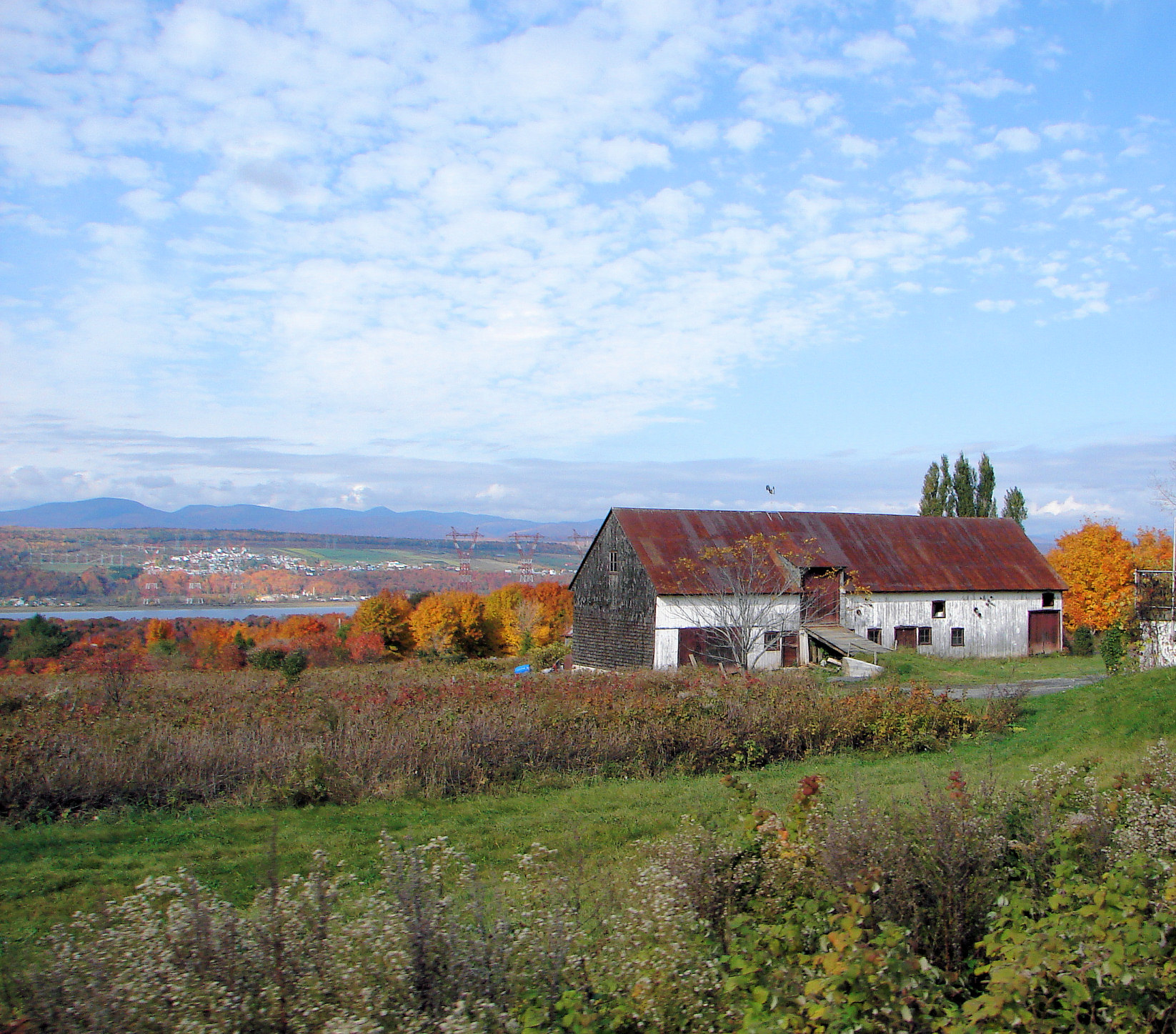
Its six villages are the string of pearls. A single scenic road, the Chemin Royal, loops the entire island in about an hour, linking Sainte-Pétronille, Saint-Laurent, Saint-Jean, Saint-François, Sainte-Famille, and Saint-Pierre — each a cluster of ancestral homes, a red-roofed church, and roadside shops. Sainte-Famille is the oldest parish; Sainte-Pétronille, on the western tip, offers sweeping views back to Old Quebec and Montmorency Falls. Driving the loop, stopping wherever something looks good, is the essential Île d'Orléans experience.
Six historic French villages, 17th-century stone houses, and orchards along the St. Lawrence.
Advertisement
But the island's true genius is its food. Blessed with a mild microclimate and rich soil, Île d'Orléans is one big farm — famous for producing the best strawberries in the province, along with apples, pumpkins, lavender, and more, much of it available to pick yourself in season. Roadside stands, sugar shacks, and family farms sell fresh produce, maple products, jams, and preserves, and the island rewards visitors who come hungry and curious more than any guidebook checklist.
The artisan food and drink scene is a destination in itself. There are vineyards making cold-climate wines, cideries pressing the island's apples, chocolatiers, cheesemakers, bakeries, and the beloved Cassis Monna & Filles, a fifth-generation family distillery turning blackcurrants into liqueurs, jams, and even cassis ice cream. Tasting your way around the island — a terrine here, an apple butter there, a glass of local wine overlooking the river — is exactly how it's meant to be done.
Île d'Orléans is honest about being a rural, seasonal place rather than a resort — it's at its lush best in summer and the fall harvest, quieter in the deep Quebec winter, and it's a French-speaking island where the pace is deliberately slow. But that gentle, agricultural soul is precisely the appeal. Six historic French villages, 17th-century stone houses, pick-your-own orchards, and a world-class artisan-food culture have made Île d'Orléans one of the most enchanting escapes in Quebec — the birthplace of French Canada, still growing its own food. For the visitor it makes an idyllic day trip or weekend from Quebec City; for anyone who loves history and good eating in equal measure, it's a genuine treasure.
Île d'Orléans, Quebec: FAQ
Is Île d'Orléans, Quebec worth visiting?
Yes. Île d'Orléans is a beautiful, farm-covered island in the St. Lawrence River just minutes from Quebec City, with six historic French villages, 17th- and 18th-century stone houses like the Maison Drouin and Manoir Mauvide-Genest, red-roofed churches, and a scenic road (the Chemin Royal) that loops the island. It's famous for pick-your-own strawberries and apples, vineyards, cideries, chocolatiers, and artisan food, making it an ideal day trip from Quebec City.
What is Île d'Orléans known for?
Île d'Orléans is known as the agricultural heart and ancestral cradle of French Canada. It's famous for its farms and pick-your-own orchards (especially strawberries and apples), vineyards and cideries, artisan food producers like Cassis Monna & Filles, its six historic villages, the densest concentration of French Regime stone houses in Quebec, and as the home of Québécois singer-poet Félix Leclerc.
How do you get to Île d'Orléans from Quebec City?
Île d'Orléans is connected to the mainland by a bridge and sits only about 5 km — roughly a 20-to-30-minute drive — east of downtown Quebec City. Cross the Île d'Orléans bridge and follow the Chemin Royal (Route 368), which loops the entire island in about an hour, to explore its six villages, farms, and food producers.
What is there to do on Île d'Orléans?
On Île d'Orléans you can drive the scenic Chemin Royal around the island, pick your own strawberries, apples, and pumpkins in season, taste at vineyards and cideries, visit Cassis Monna & Filles for blackcurrant liqueur and ice cream, tour historic sites like the Maison Drouin and Manoir Mauvide-Genest, explore the six villages and their churches, and take in river views of Old Quebec and Montmorency Falls.
Advertisement