

5 Reasons to Visit Polignano a Mare, Italy
5 Reasons to Visit Polignano a Mare, Italy
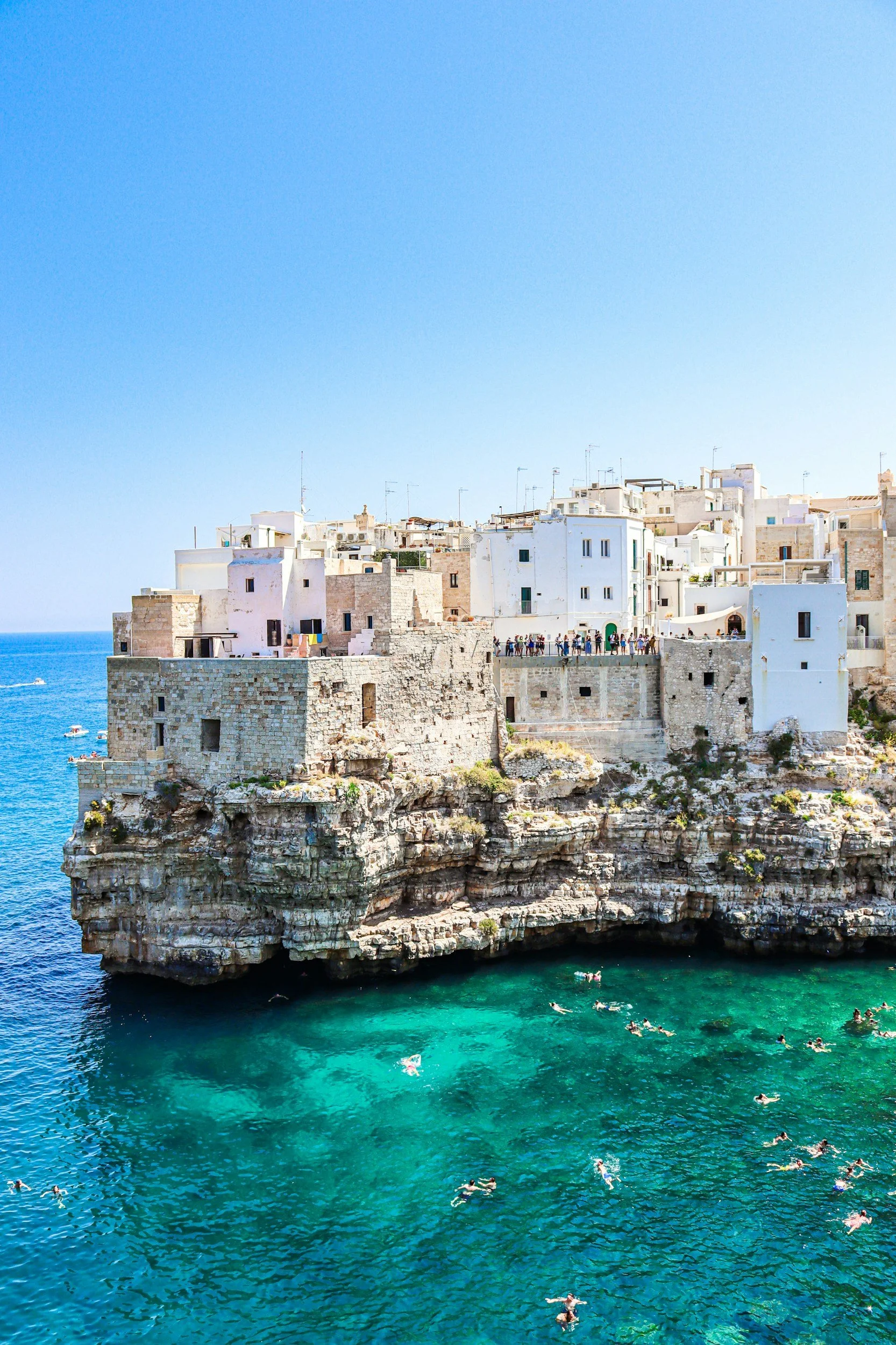
A white town balanced on limestone cliffs, with the Adriatic crashing directly beneath its houses.
Polignano a Mare is the image of Puglia you've probably already seen: whitewashed houses stacked on a limestone cliff, dropping straight into impossibly blue Adriatic water. It could coast on the view alone, but there's more here — a beach wedged in a ravine, a restaurant inside a cave, and a town that produced one of Italy's most beloved singers. Here are five reasons to visit.
The town hangs directly over the sea
Polignano's old town is built right to the lip of the cliffs, so the sea is never out of view or earshot. Terraces called belvederes punctuate the whitewashed lanes, each framing the drop and the horizon. It is small, walkable, and made for slow evenings.
You hear the Adriatic before you see it, echoing up through the town from the caves worn into the cliff below.
Wander without a map — the old town is tiny, and every alley eventually opens onto the water.
The famous beach sits inside a ravine
Lama Monachile is the postcard: a small pebble beach tucked into a rocky inlet between two cliff walls, spanned by an old bridge. It's tiny and gets busy, but the setting — turquoise water hemmed in by pale stone — is genuinely spectacular.
Go early or late to have it closer to yourself, and climb up to the bridge for the classic view down into the cove.
You can dine inside a sea cave
Polignano is home to one of Italy's most dramatic dining rooms: a restaurant built inside a natural cave in the cliff face, open to the sea. It's a splurge and books far ahead, but eating with the Adriatic murmuring below is the kind of thing you plan a trip around.
Even if you skip the cave, the town's seafood — raw crudo, sea urchin, just-caught fish — is superb and far more affordable at street level.
It invented Italy's best coffee-and-ice-cream trick
Polignano lays claim to the caffè speciale — espresso with cream, sugar, lemon zest, and a hit of amaretto, served in a glass. It's a small, specific, delicious local ritual, and the historic bar that popularized it still serves it to a queue.
It's the kind of hyper-local tradition that makes you feel you've actually been somewhere, not just photographed it.
This is Domenico Modugno's town
Polignano is the hometown of Domenico Modugno, who wrote and sang "Nel blu dipinto di blu" — the song the world knows as "Volare." A statue of him stands on the seafront, arms flung wide toward the sea that inspired the lyric about flying into the blue.
It gives the town an extra layer of meaning: you're standing where one of the most famous songs in Italian history was dreamed up, looking at the same blue.
Plan your trip to Polignano a Mare
Getting there
Fly into Bari, about 40 minutes north by car or train. Polignano is an easy day trip from Bari but rewards an overnight.
Where to stay
Stay in the old town for cliff-edge views and the best evening atmosphere once day-trippers leave.
Best time to visit
Late spring and early autumn for warm water and smaller crowds. Midsummer is beautiful but very busy.
How long to stay
One or two nights. Pair it with Bari, Alberobello, or a wider Puglia loop.
Polignano a Mare travel FAQ
What is Polignano a Mare known for?
Polignano a Mare is known for its whitewashed old town perched on Adriatic sea cliffs, the Lama Monachile cove beach, a restaurant set inside a sea cave, and as the birthplace of singer Domenico Modugno.
Is Polignano a Mare worth visiting?
Yes. Its dramatic cliff setting, clear Adriatic water, and small-town charm make it one of Puglia's most memorable stops, especially outside peak summer.
How do you get to Polignano a Mare?
Fly into Bari, about 40 minutes away, then continue by train or car. It is an easy day trip from Bari.
When is the best time to visit?
Late spring (May-June) and early autumn (September) offer warm water and fewer crowds than the busy midsummer peak.
5 Reasons to Visit Polignano a Mare, Italy