

5 Reasons to Visit Lecce, Italy
5 Reasons to Visit Lecce, Italy
They call it the Florence of the South — but Lecce is carved from butter-soft golden stone all its own.
Lecce sits deep in the heel of Italy, in the flat sun-baked Salento, and it earns its nickname the "Florence of the South" — but the comparison undersells it. Where Florence is Renaissance restraint, Lecce is Baroque exuberance, an entire honey-gold city carved from a limestone so soft that masons could cut it like cheese. Fewer tourists make it this far south, which is exactly why it rewards the trip. Here are five reasons to visit.
A whole city carved from soft golden limestone
Lecce's signature is pietra leccese, a local limestone soft enough to carve with astonishing detail when freshly quarried, which hardens over time. That single material is why the city looks the way it does: facades dripping with cherubs, gargoyles, flowers, and saints, all glowing warm gold in the afternoon light.
The stone is so soft that, the saying goes, it can be worked with a knife — which is how the carvers achieved detail you rarely see anywhere else.
Start at the Basilica di Santa Croce, the most dizzying facade in the city, then simply wander — the ornamentation is everywhere, not just the monuments.
A Roman amphitheatre sits in the middle of the piazza
In the heart of the main square, Piazza Sant'Oronzo, a Roman amphitheatre sits sunken below the modern street level — uncovered in the 20th century and still only partly excavated because the city grew over it. You stand at cafe level and look down two thousand years.
It's a reminder that Lecce was a significant Roman town long before its Baroque golden age, and the layering of eras is part of the city's texture.
Papier-mâché is a serious local art form
Lecce has a centuries-old tradition of cartapesta — papier-mâché — developed by local artisans who couldn't afford marble and became so skilled that their religious figures rival carved stone. Workshops still practice the craft today, and you can watch it happen.
It's the kind of specific, living local tradition that makes a place feel like itself rather than a backdrop, and it makes for souvenirs with actual provenance.
Salento food is Puglia at its most honest
This is the land of orecchiette, of vegetables cooked simply and brilliantly, and of the rustico leccese — a puff-pastry parcel of béchamel, tomato, and mozzarella that locals eat standing up. Wash it down with a cold caffè leccese, espresso poured over ice with almond milk.
The Salento eats like the agricultural heartland it is — generous, vegetable-forward, and cheap by the standards of anywhere north of here.
Puglian wine, especially Primitivo and Negroamaro, is the other reason to linger over dinner.
It's the perfect base for the whole Salento
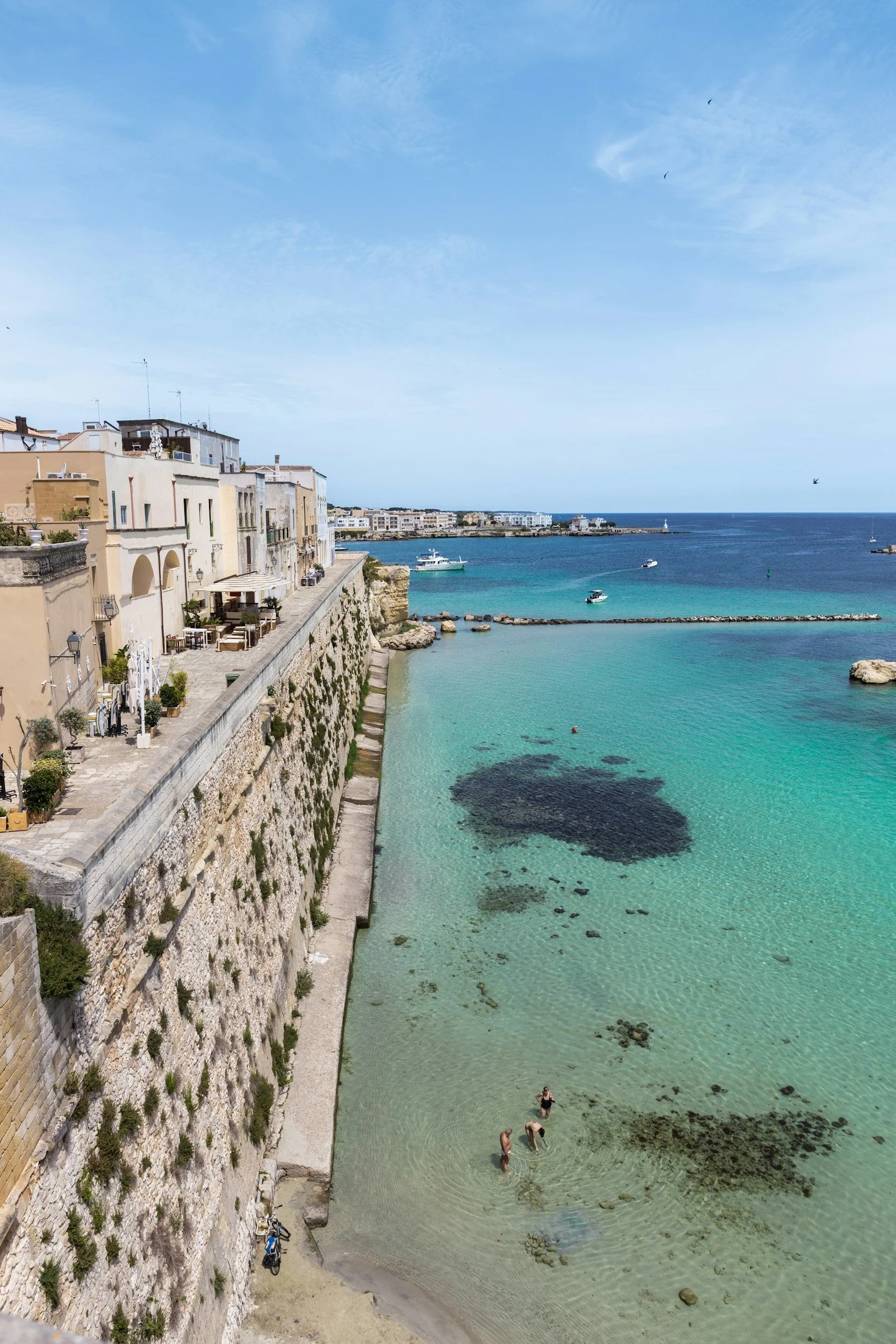
Lecce sits at the center of the Salento peninsula, within easy reach of two coastlines — the Adriatic on one side, the Ionian on the other — with some of the clearest water in Italy. Otranto, Gallipoli, and a string of beaches are all short drives away.
Base yourself in the city for the culture and food, and day-trip to the sea. Few places in Italy pack this much into so small a radius.
Plan your trip to Lecce
Getting there
Fly into Brindisi (about 40 minutes away) or Bari (roughly 1.5 hours). A car is useful for exploring the wider Salento coast.
Where to stay
Stay inside the historic centro storico to be surrounded by the Baroque and within walking distance of everything.
Best time to visit
Late spring and early autumn are ideal. High summer is hot and busy on the nearby coast.
How long to stay
Two nights for the city itself; add more if you want to explore the Salento beaches and towns.
Lecce travel FAQ
What is Lecce known for?
Lecce is famous for its exuberant Baroque architecture carved from soft golden pietra leccese limestone, earning it the nickname 'the Florence of the South.' It is also known for papier-mache craft and Salento cuisine.
Is Lecce worth visiting?
Yes. Lecce offers world-class Baroque architecture with far fewer crowds than northern Italian cities, plus excellent food and easy access to the Salento coastline.
How do you get to Lecce?
Fly into Brindisi (about 40 minutes away) or Bari (about 1.5 hours), then continue by car or train. Lecce is well connected by rail within Puglia.
When is the best time to visit Lecce?
Late spring (May-June) and early autumn (September-October) offer warm weather without the peak-summer heat and coastal crowds.
More of Southern Italy
5 Reasons to Visit Lecce, Italy