The Arizona Mountain Town Where You Can Still See the Milky Way
5 Reasons to Visit® · United States
The Arizona Mountain Town Where You Can Still See the Milky Way
No, Arizona isn't all desert. At 7,000 feet in the largest ponderosa pine forest on earth, Flagstaff protects its night sky so fiercely you can see the Milky Way over downtown.
Advertisement
Flagstaff, Arizona, upends everything people assume about the state. Forget the saguaro-and-sunbaked-desert image entirely: this is a mountain town at seven thousand feet, set in the largest contiguous ponderosa pine forest in North America, at the base of the San Francisco Peaks — home to Arizona's tallest summit. It has four real seasons, some of the snowiest winters in the country, and a fiercely protected night sky. For anyone seeking a high-country mountain life with genuine culture and access, Flagstaff has quietly become one of the most sought-after small cities in the Southwest.
Advertisement
Its most singular distinction is overhead. Flagstaff is the world's first International Dark Sky City, a designation it earned by pioneering the world's first outdoor-lighting ordinance back in 1958 and defending its skies ever since — so successfully that the Milky Way is visible over downtown, its night-sky brightness more than ninety percent fainter than comparable cities. In 2025 it was named DarkSky International's Place of the Year. This is the town where Pluto was discovered, at the historic Lowell Observatory, and where Apollo astronauts trained for the moon on the surrounding volcanic terrain. The skies here are, quite literally, the main attraction.
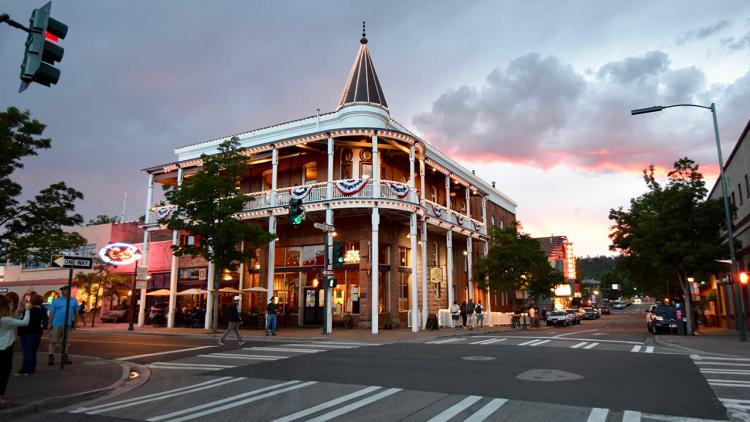
The academic and cultural energy is real. Northern Arizona University anchors the city, bringing students, researchers, and a young, environmentally conscious culture, and it shows up in a genuinely lively downtown — historic brick buildings along Route 66 filled with independent restaurants, breweries, coffee roasters, bookstores, and music venues. For a small mountain city, the density of good food, craft beer, and culture is well beyond what its size would suggest.
The Milky Way, visible over downtown — in the world's first International Dark Sky City.
Advertisement
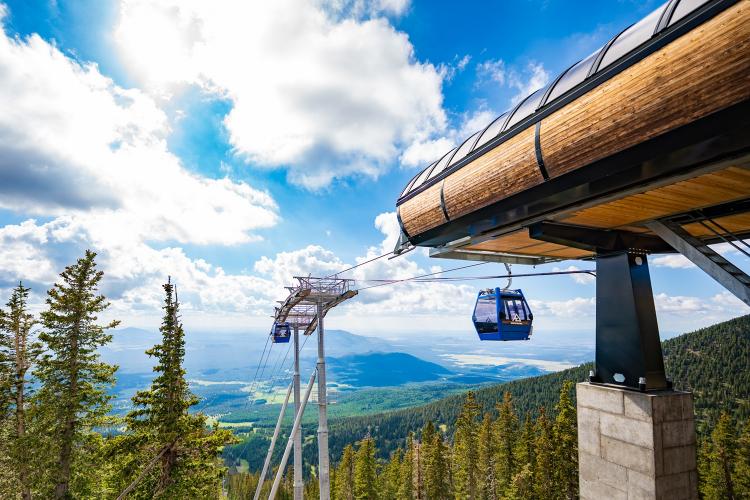
The outdoor access is extraordinary and year-round. Surrounded by national forest, Flagstaff offers world-class hiking, mountain biking, and climbing straight out of town; skiing and snowboarding at Arizona Snowbowl in winter; and a trail system that laces the whole city. And it sits at the crossroads of the Southwest's greatest wonders — the Grand Canyon is about ninety minutes north, with Sedona, the Painted Desert, and countless national monuments all within easy reach. Few basecamps in America are this well-positioned.
That combination is what keeps drawing people. As remote work has untethered people from desert cities like Phoenix — a hot two hours south — and from the coasts, Flagstaff's cool climate, pine forests, dark skies, university culture, and outdoor lifestyle have made it a magnet, even as its mountain setting and limited, forest-bounded land keep housing tight and prices high. People come for the escape from the heat and the crowds, and for a genuine four-season mountain life — the same high-country draw pulling newcomers to Western Slope hubs like Grand Junction, Colorado.
Flagstaff is honest about its constraints — bounded by national forest, it can't sprawl, and that makes housing genuinely expensive for the region. But the appeal is singular and powerful. The world's first Dark Sky City, a pine-forest mountain setting, a lively university downtown on Route 66, and the Grand Canyon at the doorstep have made Flagstaff one of the most distinctive places to live in the Southwest. For the visitor it makes a stellar, four-season escape. For the growing number who settle in, it makes the case for a high-country life under the darkest skies in America — which is exactly why they keep coming.
Flagstaff, Arizona: FAQ
Is Flagstaff, Arizona worth visiting?
Yes. Flagstaff is a 7,000-foot mountain town in the pines with a lively historic downtown on Route 66, the world's first International Dark Sky City designation and world-class stargazing at Lowell Observatory (where Pluto was discovered), four-season outdoor recreation, skiing at Arizona Snowbowl, and Grand Canyon access about 90 minutes away. It makes a stellar, surprising escape.
Why are people moving to Flagstaff, AZ?
Flagstaff draws people with its cool, high-elevation mountain climate (an escape from Phoenix's heat), pine forests, dark skies, university culture at NAU, lively downtown, and exceptional four-season outdoor access. Its forest-bounded setting keeps housing tight and prices high, but the quality of life is a powerful draw.
What is Flagstaff known for?
Flagstaff is known as the world's first International Dark Sky City, home to Lowell Observatory (where Pluto was discovered), Northern Arizona University, its 7,000-foot setting in the largest ponderosa pine forest in North America, historic Route 66, Arizona Snowbowl skiing, and its role as a gateway to the Grand Canyon.
Is Flagstaff a good place to live?
Flagstaff offers a cool four-season mountain climate, dark skies, a lively university downtown, and world-class outdoor access, making it one of the most desirable places to live in the Southwest. The main trade-off is high housing costs, as the city is bounded by national forest and cannot easily expand.
Advertisement