How Bethlehem Turned Its Dead Steel Mill Into an Arts Capital
5 Reasons to Visit® · United States
How Bethlehem Turned Its Dead Steel Mill Into an Arts Capital
In the rusted shadow of the blast furnaces that once armed the world, a Pennsylvania steel town has staged one of the most dramatic industrial reinventions in America.
Advertisement
Bethlehem, Pennsylvania, is a city of two dramatic identities, and both are having a moment. For most of the twentieth century it was a steel town — home to Bethlehem Steel, once the second-largest steelmaker in America, whose furnaces forged the beams of the Golden Gate Bridge, Rockefeller Center, and much of the nation's skyline. When the company collapsed in the 1990s, it could have gutted the city. Instead, Bethlehem engineered one of the most striking industrial reinventions in the country, and today it is a thriving arts-and-culture destination in the heart of the Lehigh Valley.
Advertisement
The centerpiece is unforgettable. Rather than demolish the shuttered steelworks, Bethlehem transformed the site into SteelStacks — a ten-acre arts-and-entertainment campus built literally at the foot of five towering, rusted blast furnaces that have been preserved and dramatically lit. Concerts, festivals, films, and one of the largest free music festivals in the nation now unfold in the shadow of the machinery that once ran around the clock. It is a genuinely awe-inspiring fusion of industrial history and living culture, and nothing else in America looks quite like it.
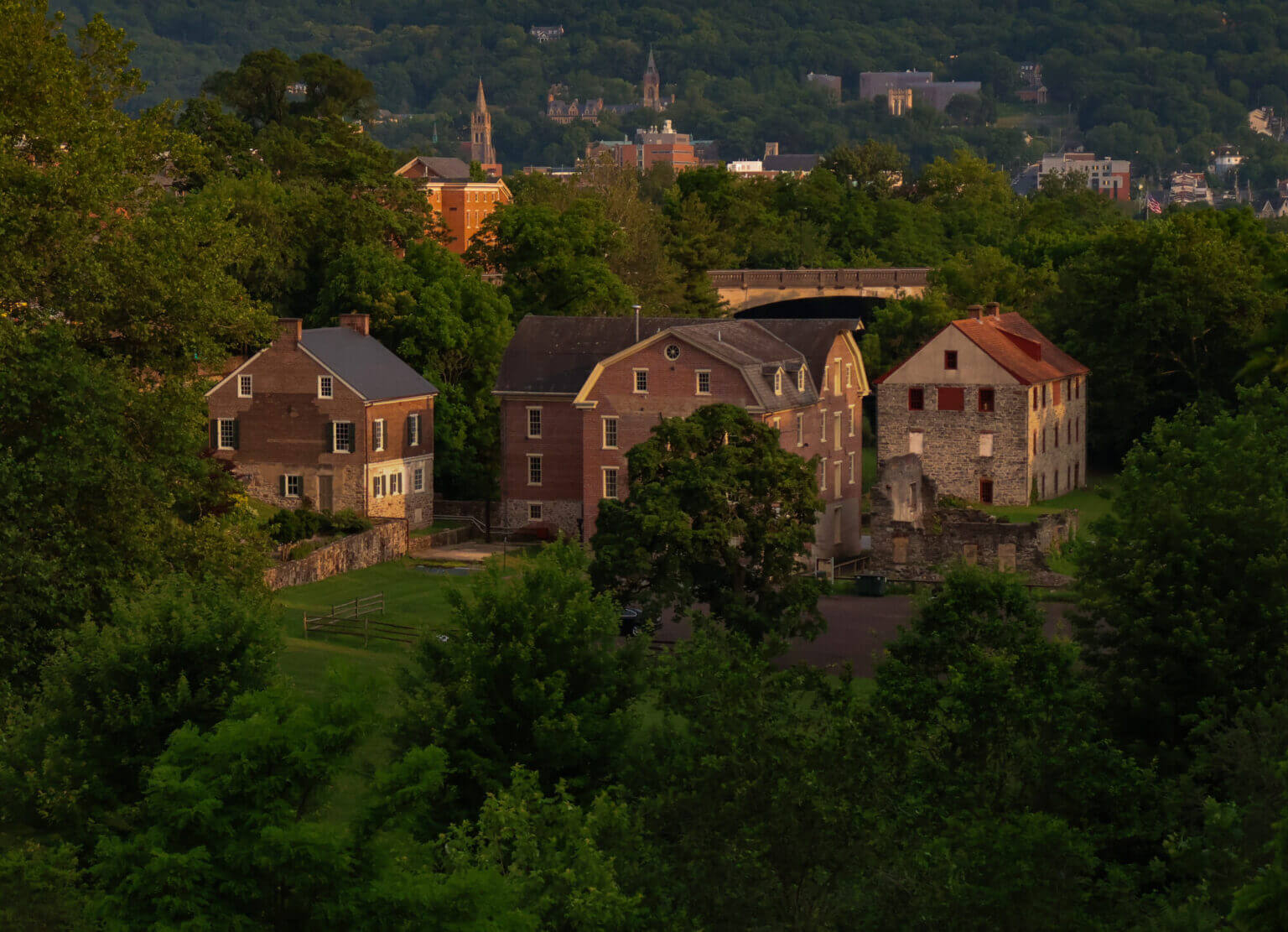
The city's other identity is even older. Bethlehem was founded on Christmas Eve in 1741 by Moravians, a Protestant community whose beautifully preserved eighteenth-century stone buildings make up a historic district now recognized as a UNESCO World Heritage Site. That heritage gives the city its beloved nickname, "Christmas City," and its historic Main Street — walkable, lamp-lit, and lined with independent shops and restaurants — becomes a famous holiday destination each December, drawing visitors from across the region.
Concerts and festivals staged at the foot of five towering blast furnaces that once forged the nation's skyscrapers.
Advertisement
The economy has diversified well beyond steel. The Lehigh Valley has become one of Pennsylvania's economic bright spots, with logistics, healthcare, and higher education anchoring the region, and Bethlehem is home to Lehigh University and Moravian University, which bring students, research, and energy. That mix of a revitalized cultural economy, education, and a broader regional job base gives the city real, diversified footing rather than dependence on any single industry.

Location and value drive the growing interest. Bethlehem sits within reach of both New York City and Philadelphia — roughly ninety minutes to either — making the Lehigh Valley an increasingly popular landing spot for people priced out of those metros who still want access to them. Housing remains more affordable than in the big cities, the walkable downtowns are genuinely charming, and the combination of culture, history, and connectivity has drawn families, remote workers, and commuters alike — the same Pennsylvania pull felt in Lancaster to the south.
Bethlehem faces the growth pressures of a Lehigh Valley that is booming, and its reinvention continues to evolve. But the appeal is genuine and visually unforgettable. A dead steel mill reborn as an arts campus beneath its own blast furnaces, a UNESCO-listed Moravian heritage, a walkable "Christmas City" downtown, and value within reach of two major metros have made Bethlehem one of the most dramatic comeback stories in the country. For the visitor it makes a striking, atmospheric weekend. For the growing number who settle in, it makes the case for a life where industrial history and living culture meet — which is exactly why they keep coming.
Bethlehem, Pennsylvania: FAQ
Is Bethlehem, Pennsylvania worth visiting?
Yes. Bethlehem offers SteelStacks — an arts-and-entertainment campus built at the foot of the preserved blast furnaces of the old Bethlehem Steel mill — plus a UNESCO World Heritage Moravian historic district, a walkable 'Christmas City' Main Street especially magical in December, and festivals year-round. It makes a striking, atmospheric weekend in the Lehigh Valley.
Why are people moving to Bethlehem, PA?
Bethlehem sits within about 90 minutes of both New York City and Philadelphia, making the booming Lehigh Valley a popular landing spot for people priced out of those metros. It offers a revitalized arts-and-culture scene, walkable historic downtowns, universities, a diversified economy, and more affordable housing than the big cities.
What is Bethlehem known for?
Bethlehem is known for SteelStacks, the arts campus built around the preserved blast furnaces of former Bethlehem Steel; for its Moravian founding and UNESCO World Heritage historic district; as the 'Christmas City' for its famous holiday celebrations; and for Lehigh and Moravian universities in the Lehigh Valley.
Is Bethlehem a good place to live?
Bethlehem offers a revitalized arts-and-culture scene, walkable historic downtowns, a UNESCO-listed heritage, universities, and a diversified Lehigh Valley economy, all within about 90 minutes of New York and Philadelphia and more affordable than either. As the Lehigh Valley booms, housing costs are rising, but it remains a strong value.
Advertisement