How a TV Show Turned Waco Into a Texas Boomtown
5 Reasons to Visit® · United States
How a TV Show Turned Waco Into a Texas Boomtown
Halfway between Dallas and Austin, a city most Texans used to just drive past has become a place they plan whole trips around — and increasingly, move to.
Advertisement
For decades, Waco was the city you passed on I-35. Sitting almost exactly halfway between Dallas and Austin on the banks of the Brazos River, it was a place most Texans knew only as a highway exit and a name attached to old headlines. That reputation has been comprehensively rewritten. Over the past decade, Waco has transformed into one of the most-visited small cities in Texas and a rising destination for families and businesses relocating to Central Texas — a turnaround few would have predicted for a mid-sized town on the interstate.
Advertisement
The catalyst was, improbably, television. When a locally based couple turned their home-renovation business into a wildly popular national show and built a sprawling retail and dining destination — a former industrial site with a pair of towering silos — at the edge of downtown, it drew millions of visitors to Waco seemingly overnight. What could have been a passing fad instead became an anchor: the crowds it brought created a market that a wave of new restaurants, shops, breweries, and boutique hotels rushed to fill, reviving a downtown that had languished for years.
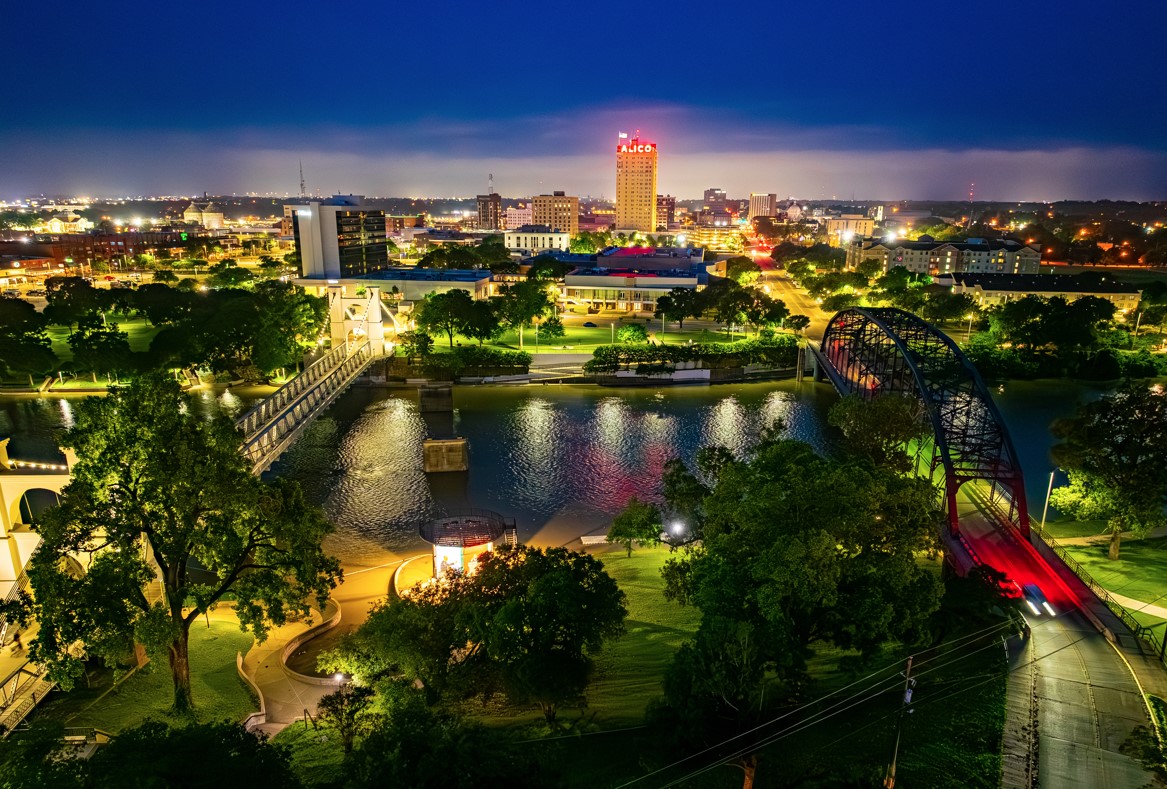
Underneath the tourism sits a more durable engine. Baylor University, the largest Baptist university in the world, has spent the last decade rising in national prominence and investment, anchoring the local economy with students, research, jobs, and a growing football-fueled profile. Together with a strong regional healthcare sector and Central Texas's broader economic momentum, Baylor gives Waco an economic base well beyond its viral moment — the kind of foundation that turns visitors into residents.
A single renovation show put a drive-through Texas city on the national map — and it stayed there.
Advertisement
The city has used the attention to reinvest in itself. The revitalized downtown and the Brazos riverfront now offer walkable dining, public spaces, and river trails, and longtime attractions — the Waco Mammoth National Monument, the Dr Pepper Museum honoring the soft drink invented here, and the suspension bridge over the Brazos — have found new life amid the renewed interest. A city that once had little reason to keep visitors overnight now fills its hotels.
That momentum is what has begun drawing new residents. Central Texas's explosive growth has pushed people and businesses outward from Austin and the Metroplex, and Waco — with its lower cost of living, no state income tax, central location, and newly vibrant downtown, part of the same statewide surge lifting Georgetown, Texas — — has become a natural landing spot. Housing remains far more affordable than in Austin, the interstate and regional airport keep the city connected, and the combination of small-city ease and big-city access is a powerful draw.
Waco carries its history honestly, and locals are clear-eyed that a viral tourism boom brings its own challenges around growth and authenticity. But the transformation is real and has proven durable well beyond a single television season. A revitalized downtown, a rising national university, the Brazos riverfront, and Central Texas affordability have turned a drive-through city into a genuine destination. For the visitor it makes an easy, surprising stop between Dallas and Austin. For the growing number who decide to stay, it makes the case for a Central Texas life without the Central Texas price tag — which is exactly why they keep choosing it.
Waco, Texas: FAQ
Is Waco, Texas worth visiting?
Yes. Waco has transformed into a genuine destination with a revitalized downtown, the popular Magnolia silos retail-and-dining complex, the Brazos riverfront, the Waco Mammoth National Monument, the Dr Pepper Museum, and Baylor University. Conveniently located on I-35 halfway between Dallas and Austin, it makes an easy and surprising stop or long weekend.
Why are people moving to Waco?
Waco has become a landing spot for people and businesses pushed outward by Central Texas's explosive growth, offering a lower cost of living than Austin, no state income tax, a central location on I-35, a revitalized downtown, and a strong economic base anchored by Baylor University and regional healthcare.
What is Waco known for?
Waco is known for the Magnolia silos and the renovation-TV empire that revitalized its downtown, Baylor University, the Dr Pepper Museum, the Waco Mammoth National Monument, the historic Brazos River suspension bridge, and its central location between Dallas and Austin.
Is Waco a good place to live?
Waco offers a revitalized downtown, a rising national university, riverfront recreation, and a central Texas location, all at a cost of living well below Austin's and with no state income tax. Like many fast-growing Texas cities, it is working to manage growth while keeping its character.
Advertisement