Sleepy Hollow Is a Real Place, Headless Horseman and All. Here’s Why You Should Go.
5 Reasons to Visit® · New York · Hudson Valley
Sleepy Hollow Is a Real Place, Headless Horseman and All. Here’s Why You Should Go.
Washington Irving made it famous in 1820, and the village leaned in, renaming itself after the legend in 1996. Come for the Headless Horseman in October, then discover the history, art and Hudson River trails that make it worth a visit any season.
Advertisement
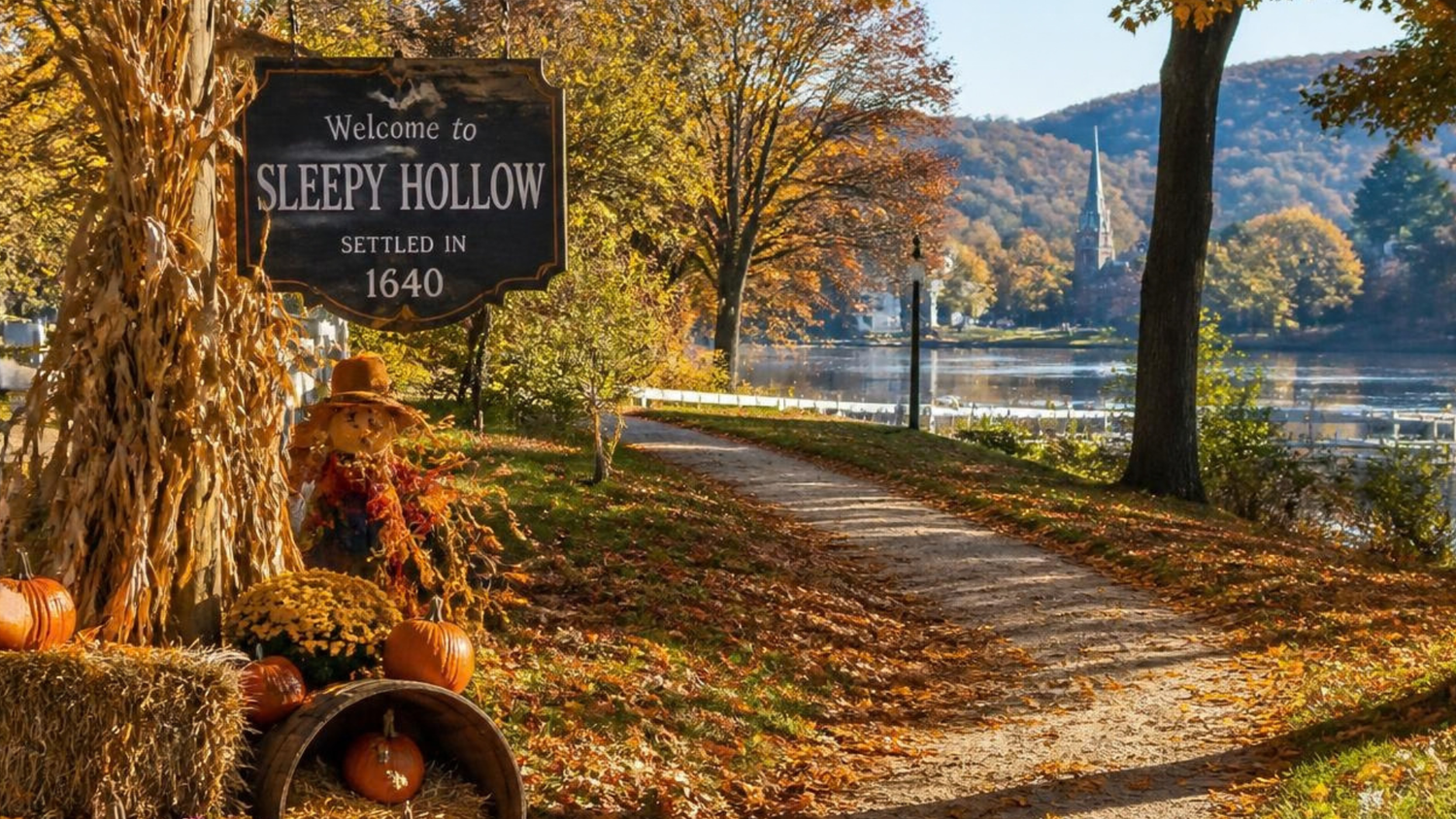
Sleepy Hollow, New York, is the rare literary landmark you can actually walk into. Washington Irving set “The Legend of Sleepy Hollow” here in 1820, and the riverside village, known for most of its history as North Tarrytown, officially took the story’s name in 1996. Today the Headless Horseman rides across street signs, a horseman statue guards the village, and Irving himself rests in the cemetery that inspired him, about an hour north of Manhattan by Metro-North. October is when the village comes most alive, with lantern tours, candlelit readings and one of the country’s most celebrated Halloween seasons, but the colonial manor, Rockefeller-commissioned art and Hudson River trails make the case year-round. Here are five reasons to go.
Advertisement
1Things to See & Do
Things to Do in Sleepy Hollow: Walk Straight Into the Legend
Start where Irving’s story starts. The Old Dutch Church, dating to the late 1600s and one of the oldest churches in New York State, sits beside the burying ground Irving described as a favorite haunt of troubled spirits, and just beyond it spreads Sleepy Hollow Cemetery, where Irving himself is buried alongside Andrew Carnegie, a Rockefeller, Walter Chrysler, Elizabeth Arden and Leona Helmsley. Take a daytime walking tour, or in the fall, an evening lantern tour. Then find the Headless Horseman Bridge and the dramatic horseman sculpture that welcomes visitors to the village.
Across the road, Philipsburg Manor, run by Historic Hudson Valley and open for tours from May through November, brings the 1700s to life with a stone manor house, a working water-powered gristmill and an honest look at the enslaved community that ran this colonial trading center. In October, the region’s Halloween season takes over, from Historic Hudson Valley’s Headless Horseman-themed events to candlelit performances of Irving’s tale. One note for 2026: tours of Kykuit, the Rockefeller estate on the hill above the village, are on hiatus this year and are expected to return in 2027 under the Rockefeller Brothers Fund.
2Dining Scene
Where to Eat in Sleepy Hollow: Horseman Burgers to a Farm-to-Table Landmark
Sleepy Hollow eats like the neighborhood village it is. Along Beekman Avenue, J.P. Doyle’s serves Irish-pub comfort food with a nod to the local legend in its Horseman Burger, and family-run Latin American restaurants and bakeries reflect the village’s large Ecuadorian community, one of the best reasons to linger on the avenue. Just south, Tarrytown’s Main Street adds a wider run of cafés, wine bars and restaurants within a short drive or a long walk.
For a destination meal, drive a few minutes into the hills of Pocantico to Blue Hill at Stone Barns, chef Dan Barber’s farm-to-table restaurant set in the stone barns of a former Rockefeller estate, where much of what lands on the plate is grown in the surrounding fields and pastures. It is one of the most celebrated farm restaurants in the country, so reserve well ahead, especially in autumn.
Irving called it a favorite haunt of troubled spirits. Two centuries later, it’s a favorite haunt of everyone else.
Advertisement
3Recreation
Outdoor Sleepy Hollow: Carriage Roads, a Lighthouse and the Hudson River
Rockefeller State Park Preserve, on the former Rockefeller estates just east of the village, is one of the loveliest walks in the Hudson Valley, with miles of gently graded carriage roads winding past Swan Lake, stone bridges, meadows and woods that blaze with color in October. It’s ideal for walking, running and horseback riding, and in winter some trails suit cross-country skiing.
Down by the water, Kingsland Point Park leads to the Sleepy Hollow Lighthouse, a cast-iron light on the Hudson River dating to 1883. The Old Croton Aqueduct Trail runs through the village on its long path down the river towns, and just south in Tarrytown, the shared-use path across the Governor Mario M. Cuomo Bridge carries walkers and cyclists more than three miles across the Hudson toward Nyack, with sweeping river views at every step.
4Shopping
Shopping in Sleepy Hollow: Legend Keepsakes, Antiques and Market Saturdays
Beekman Avenue is Sleepy Hollow’s main street, an unpretentious mix of local businesses, bakeries and shops where you’ll find Headless Horseman keepsakes year-round. The museum shops at Philipsburg Manor and Historic Hudson Valley’s sites are good places to pick up Irving editions, colonial-craft goods and Hudson Valley-made gifts.
For serious browsing, continue into Tarrytown, whose Main Street is lined with antique shops, independent boutiques, galleries and specialty food stores. On Saturdays from late spring through fall, the TaSH Farmers Market, shared by Tarrytown and Sleepy Hollow, gathers regional farmers, bakers and makers, an easy way to take a taste of the Hudson Valley home.
5Art & Culture
Sleepy Hollow’s Art Scene: Matisse and Chagall in a Country Church
The area’s most astonishing art hides in a small stone church in the hills. The Union Church of Pocantico Hills, open to visitors from May through December, holds a series of stained-glass windows by Marc Chagall and a luminous rose window by Henri Matisse, commissioned by members of the Rockefeller family. It is among the most remarkable small art experiences anywhere in the Northeast, and a short drive from the village center.
Literature is the other art form here. Washington Irving’s Sunnyside, his romantic riverside cottage a few miles south, is open for guided tours from May through November, and in October, storytellers bring the Legend to life by candlelight inside the Old Dutch Church. Nearby, the Gothic Revival mansion of Lyndhurst and the historic Tarrytown Music Hall round out a cultural itinerary that runs from colonial history to the Gilded Age.
Plan Your Sleepy Hollow Trip
Sleepy Hollow rewards planning around the calendar. October brings the legend to full volume, and the most popular Halloween events and tours sell out, so book tickets weeks ahead and consider a weekday visit. For history, art and trails with fewer crowds, come in late spring or early fall, when Philipsburg Manor, Sunnyside and Union Church are open and the carriage roads are at their best. Give it a full day from New York City, or a weekend paired with Tarrytown and the river towns of the Hudson Valley.
Sleepy Hollow, New York: FAQ
Is Sleepy Hollow, NY a real place?
Yes. Sleepy Hollow is a real village in Westchester County, New York, on the Hudson River about an hour north of Manhattan. Washington Irving set “The Legend of Sleepy Hollow” there in 1820, and the village, long known as North Tarrytown, officially changed its name to Sleepy Hollow in 1996.
Is Sleepy Hollow worth visiting?
Yes, especially in fall. Visitors can see the Old Dutch Church and Sleepy Hollow Cemetery, where Washington Irving is buried, tour Philipsburg Manor, attend Halloween events, view Matisse and Chagall stained-glass windows at the Union Church of Pocantico Hills, and walk the carriage roads of Rockefeller State Park Preserve.
What are the best things to do in Sleepy Hollow?
Top things to do in Sleepy Hollow include visiting the Old Dutch Church and Sleepy Hollow Cemetery, taking a lantern tour in the fall, seeing the Headless Horseman Bridge and statue, touring Philipsburg Manor, viewing the windows at the Union Church of Pocantico Hills, hiking Rockefeller State Park Preserve, and walking to the Sleepy Hollow Lighthouse.
Can you tour Kykuit in 2026?
No. Tours of Kykuit, the Rockefeller estate near Sleepy Hollow, are on hiatus for 2026. Tours are expected to resume in 2027, hosted by the Rockefeller Brothers Fund.
When is the best time to visit Sleepy Hollow?
October is the most popular time to visit Sleepy Hollow for its Halloween events, lantern tours and fall foliage, but it is also the most crowded, and popular events sell out. Late spring and early fall offer open historic sites and fewer crowds.
How do you get to Sleepy Hollow from New York City?
Take Metro-North’s Hudson Line from Grand Central Terminal to Philipse Manor or Tarrytown station, a trip of roughly 40 to 50 minutes. By car, Sleepy Hollow is about an hour north of Manhattan, depending on traffic.
Who is buried in Sleepy Hollow Cemetery?
Sleepy Hollow Cemetery is the burial place of Washington Irving, as well as Andrew Carnegie, Walter Chrysler, Elizabeth Arden, Leona Helmsley and members of the Rockefeller family.
Advertisement