Jacksonville Was the Florida City Everyone Drove Past. Then Michelin Showed Up.
5 Reasons to Visit® · Florida
Jacksonville Was the Florida City Everyone Drove Past. Then Michelin Showed Up.
Florida’s biggest city spent years as the place people drove past on I-95. Then Michelin inspectors came calling, and the rest of the case was there all along: a great river, wild barrier islands and neighborhoods with real character.
Advertisement
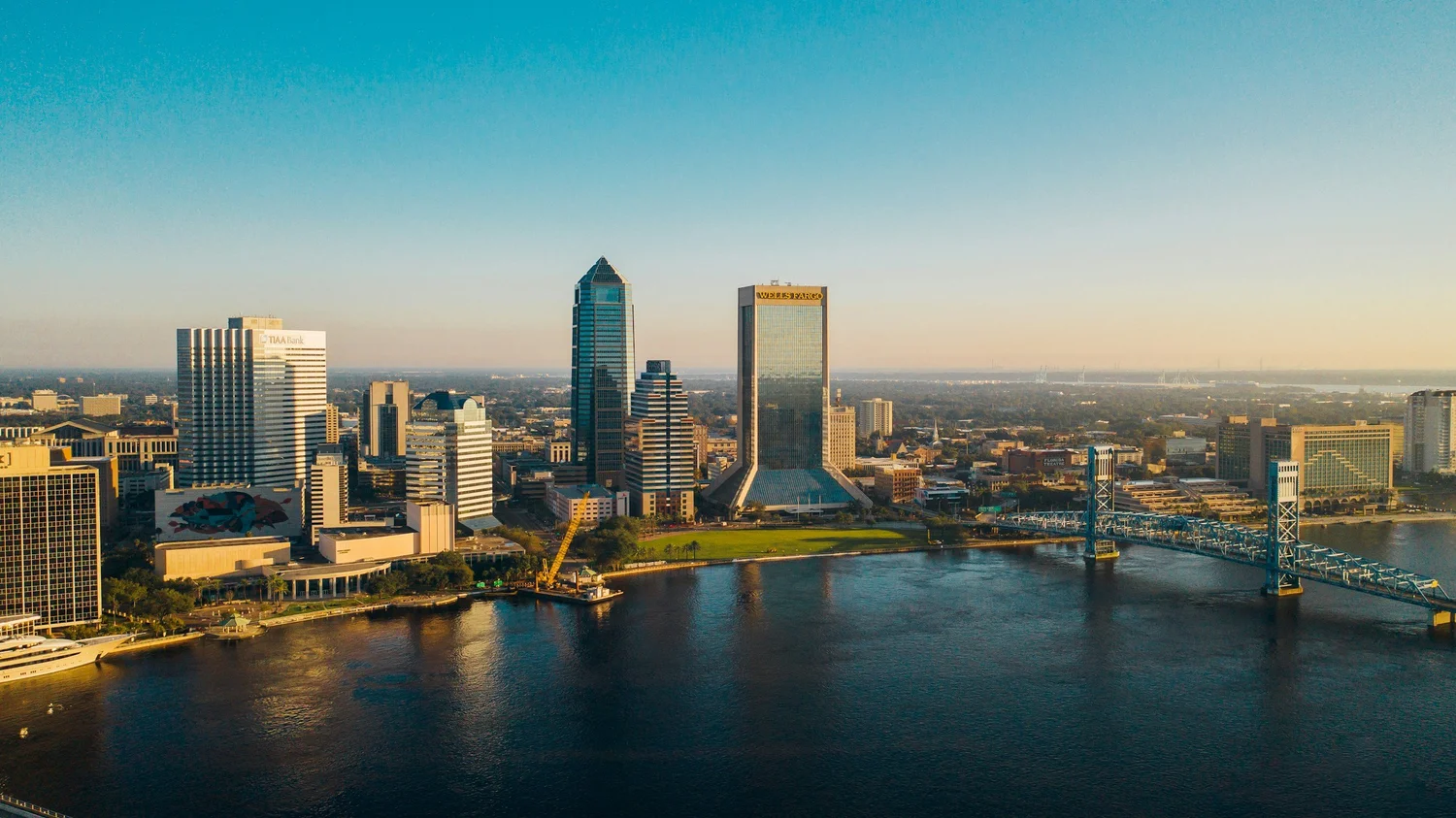
Jacksonville, Florida, is the largest city by land area in the continental United States, and for a long time that size worked against it. Travelers saw bridges, office towers and interstate, and kept driving toward St. Augustine or Amelia Island. That read has aged badly. The St. Johns River curls straight through downtown, the Atlantic is about half an hour east, the city holds the largest urban park system in the country, and in 2026 the MICHELIN Guide expanded into Northeast Florida for the first time, naming two San Marco restaurants to its Florida list. Here are five reasons to give Jacksonville the trip it deserves.
Advertisement
1Things to See & Do
Things to Do in Jacksonville: Start With the River
The St. Johns River is Jacksonville’s real main street, one of the few major American rivers that flows north, and the best introduction to the city is to walk beside it. The Riverwalk lines both banks of downtown. On the Southbank, Friendship Fountain throws its jets skyward at the water’s edge, and nearby Treaty Oak Park shelters a Southern live oak estimated at roughly 250 years old. Come back after dark, when the bridges light up across the water.
Then go further back in time. Inside the city limits, the Timucuan Ecological and Historic Preserve protects some 46,000 acres of salt marsh and more than 6,000 years of human history. Fort Caroline National Memorial recalls a 16th-century French settlement and some of the earliest contact between Native people and Europeans in what is now the United States, while Kingsley Plantation on Fort George Island tells the story of the people enslaved there through its rows of tabby cabins. Round it out with the Jacksonville Zoo and Gardens and, in fall, a Jaguars game, and the itinerary fills itself.
2Dining Scene
Where to Eat in Jacksonville: Michelin Has Arrived
This is the news. When the MICHELIN Guide widened its Florida coverage to the entire state in 2026, its inspectors recommended restaurants in Northeast Florida for the first time, including two in San Marco: The Bearded Pig and Rue Saint Marc. Eggboy, out by the beaches, made the list too. No stars yet, but a place in the guide puts a kitchen squarely on the inspectors’ radar, and Jacksonville’s chefs have noticed.
The deeper pleasure is how local it all tastes. Mayport, the old fishing village at the mouth of the St. Johns, is the place to eat the wild-caught shrimp the area is known for. The camel rider, a stuffed pita sandwich from the city’s Arabic delis, is a Jacksonville original worth seeking out. The Jacksonville Ale Trail strings together dozens of craft breweries across the city and beaches, and the neighborhood restaurant rows of San Marco, Riverside and Avondale make for an easy night out. For a splurge, the Michelin-recommended Salt at The Ritz-Carlton, Amelia Island is less than an hour north.
Michelin found San Marco in 2026. The river, the marshes and the beaches were here all along.
Advertisement
3Recreation
Outdoor Jacksonville: Beaches, Barrier Islands and the Biggest Urban Park System in America
Jacksonville claims the largest urban park system in the United States, with hundreds of city parks plus state and national preserves, and most of the best of it sits on the water. Three beach towns line the Atlantic: Jacksonville Beach brings the surf shops and the bar scene, while Neptune Beach and Atlantic Beach share a low-key Beaches Town Center made for an afternoon of browsing and a long lunch. In Atlantic Beach, Kathryn Abbey Hanna Park wraps some 450 acres of beach, freshwater lake and about 15 miles of trails into one oceanfront park.
Head north on A1A and it gets wild. At Big Talbot Island State Park, Boneyard Beach is strewn with the sun-bleached trunks of oaks and cedars that once stood on the bluff, one of the most photographed shorelines in Florida. Next door, Little Talbot Island offers about five miles of undeveloped beach, and Huguenot Memorial Park is the one local beach where you can drive onto the sand. Rent a kayak and paddle the tidal creeks of the Timucuan Preserve, and you may share the water with dolphins and wading birds.
4Shopping
Shopping in Jacksonville: Boutiques, Vintage and a Saturday Market
For big names, St. Johns Town Center on the Southside is the region’s open-air shopping hub. Jacksonville’s better shopping, though, is neighborhood-scale. In Avondale, the tree-shaded Shoppes of Avondale gather boutiques, home stores and cafés along St. Johns Avenue. Five Points in Riverside leans vintage and offbeat, and San Marco Square, named for its Venetian namesake, mixes shops with some of the city’s most talked-about dining.
Time your trip for a Saturday. The Riverside Arts Market sets up beneath the Fuller Warren Bridge from 10 a.m. to 3 p.m., rain or shine, with local makers, artists, farm produce and food vendors along the river, and in winter it runs a holiday market beside the city’s Artist Walk ice rink. The Jacksonville Farmers Market, dating to 1938 and billed as Florida’s oldest, sells from local growers every day.
5Art & Culture
Jacksonville’s Art Scene: Riverside Gardens, Contemporary Galleries and a Monthly Art Walk
Start at the Cummer Museum of Art & Gardens in Riverside, built on the former riverfront estate of Ninah and Arthur Cummer and opened in 1961. It is the largest fine-arts museum in Northeast Florida, with a collection of more than 5,000 works reaching from antiquity to American art, and formal gardens that step down toward the St. Johns. Downtown, MOCA Jacksonville, run with the University of North Florida, focuses on contemporary art from its home beside James Weldon Johnson Park.
On the first Wednesday of every month, the First Wednesday Art Walk, running since 2003, turns the downtown Northbank into an open-air gallery of studios, vendors, music and public art. In the historic LaVilla neighborhood, the Ritz Theatre & Museum celebrates the city’s African American heritage, including brothers James Weldon Johnson and J. Rosamond Johnson, who wrote “Lift Every Voice and Sing” in Jacksonville. Between stops, look up: murals commissioned across the urban core have turned blank walls into one of the South’s more surprising street-art collections.
Plan Your Jacksonville Trip
Jacksonville rewards a plan. It is vast and spread out, so pick a base and rent a car. Summers are hot and humid and hurricane season runs from June through November, which makes spring and fall the sweet spots. Give it three days, one on the river and in the neighborhoods, one at the beaches and barrier islands, and one for museums and a long dinner in San Marco, and the city people used to drive past starts to look like the reason to stop.
Jacksonville, Florida: FAQ
Is Jacksonville, Florida worth visiting?
Yes. Jacksonville pairs a walkable riverfront downtown on the St. Johns River with Michelin-recommended dining in San Marco, three Atlantic beach towns, wild barrier-island parks such as Big Talbot Island’s Boneyard Beach, neighborhood shopping in Riverside, Avondale and San Marco, and a strong art scene led by the Cummer Museum of Art & Gardens and the First Wednesday Art Walk. St. Augustine and Amelia Island are each within about an hour’s drive.
What is Jacksonville, Florida known for?
Jacksonville is known as the largest city by land area in the continental United States, for the St. Johns River that runs through downtown, for having the largest urban park system in the country, for its beaches, for the Jacksonville Jaguars, and as the city where James Weldon Johnson and J. Rosamond Johnson wrote “Lift Every Voice and Sing.”
What are the best things to do in Jacksonville?
Top things to do in Jacksonville include walking the downtown Riverwalk and Friendship Fountain, exploring the Timucuan Ecological and Historic Preserve, Fort Caroline and Kingsley Plantation, visiting the Cummer Museum of Art & Gardens and MOCA Jacksonville, shopping the Saturday Riverside Arts Market, dining in San Marco, and spending a day at Jacksonville Beach or Big Talbot Island State Park.
Does Jacksonville have Michelin restaurants?
Jacksonville has no Michelin-starred restaurants yet, but in 2026 the MICHELIN Guide expanded into Northeast Florida for the first time and recommended two Jacksonville restaurants in San Marco: The Bearded Pig and Rue Saint Marc. Eggboy near the beaches and Salt at The Ritz-Carlton, Amelia Island were also recommended.
What are the best beaches near Jacksonville?
The main beach towns are Jacksonville Beach, Neptune Beach and Atlantic Beach. For a wilder coast, visit Kathryn Abbey Hanna Park, Little Talbot Island State Park, Boneyard Beach on Big Talbot Island, and Huguenot Memorial Park, the one local beach where you can drive on the sand.
When is the best time to visit Jacksonville?
Spring (March to May) and fall (October to November) are the best times to visit Jacksonville, with warm, comfortable weather. Summers are hot and humid, and the Atlantic hurricane season runs from June through November.
How many days do you need in Jacksonville?
Three days is a good first visit: one for downtown, the river and the Riverside, Avondale and San Marco neighborhoods; one for the beaches and the Talbot Islands; and one for museums, shopping and dinner. Add a day or two to include St. Augustine or Amelia Island.
Advertisement